
Kitchen design · Northern Virginia
Kitchen Design Mistakes People Regret (and What to Do Instead)
The kitchen mistakes people regret most are poor work-zone flow, too little counter landing space, lighting planned too late, not enough of the right storage, weak ventilation, and trendy finishes that date fast. Most are layout and planning errors, which is good news: they are fixed cheaply on paper, before cabinets are ordered, not after.
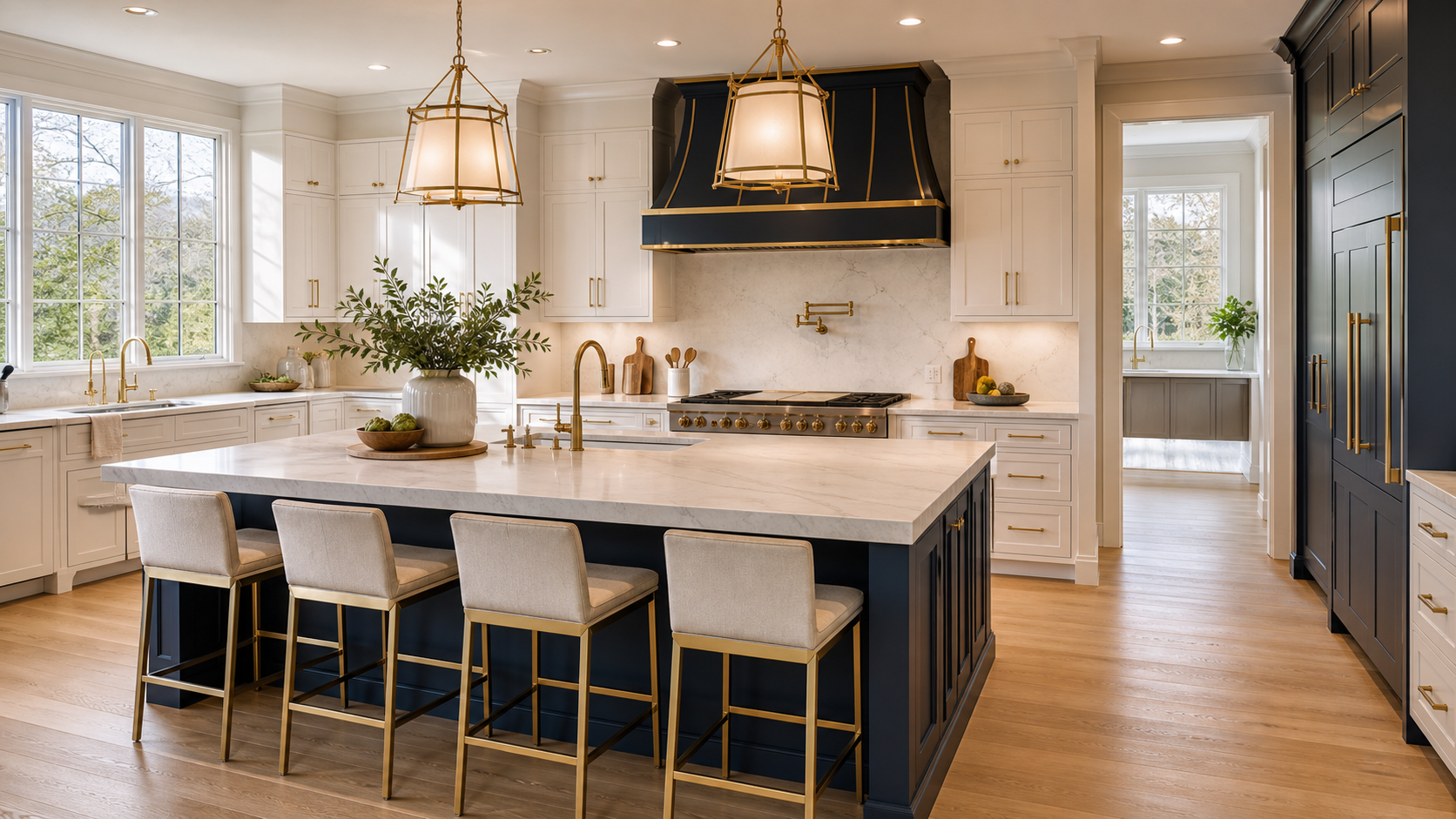
After three decades of kitchens, we have seen the same handful of regrets over and over, and almost none of them are about the color of the cabinets. They are about how the kitchen works. The pretty kitchen that drives you crazy to cook in is the real failure. Here are the mistakes that come up most, and the fix for each.
What are the most common kitchen design mistakes?
The most common kitchen mistakes are cramped or blocked work zones, not enough counter space beside the range and sink, too few or poorly placed outlets, lighting added as an afterthought, undersized or wrong-type storage, and weak ventilation. Nearly all are planning errors decided before a single cabinet is built, which is exactly why they are avoidable.
The thread connecting them: they are baked in during design, not during shopping. You cannot fix a bad layout with a beautiful countertop. That is why a kitchen project lives or dies in the planning phase, and why the regrets that last are the ones nobody caught on the drawings.
The layout mistakes
The big layout errors: walkways under 42 inches, an island too close to cabinets (leave 42 to 48 inches of clearance), a sink-stove-fridge work triangle that is broken by traffic, and no landing counter beside the cooktop or fridge. These make a kitchen feel cramped and frustrating no matter how good the finishes look.
Clearance numbers are not arbitrary; they come from how bodies and cabinet doors actually move. Around an island, the NKBA guideline is 42 inches of walkway, 48 inches if two cooks pass. A main walkway should be at least 42 inches. People routinely shave these to squeeze in a bigger island, then spend years sidestepping an open dishwasher door. Plan the clearances first, then size the island to fit, not the other way around.
- Island too big for the room. It looks great on the plan and blocks the walkways in real life.
- No landing space. You need counter beside the range, the fridge, and the sink to actually cook.
- Traffic through the work triangle. A path from the back door straight through the cook zone is a daily annoyance.
Storage and counter mistakes
The storage regrets are quantity and type: too few drawers (drawers beat lower-cabinet shelves for pots and everyday items), no dedicated spots for trash, recycling, and small appliances, and wasted corners. The counter regret is too little usable surface. Plan storage around what you own and how you cook, not around a generic cabinet layout.
Deep drawers have quietly replaced lower-cabinet doors in well-designed kitchens for good reason: you can see and reach everything without crouching. Other easy wins people skip are a dedicated pull-out for trash and recycling, an appliance garage to keep the counters clear, and corner solutions so that cabinet does not become a black hole. Storage should be designed around your actual stuff, which is one more reason the planning conversation matters.
Lighting and ventilation mistakes
Lighting is the most regretted miss: relying on a single overhead fixture instead of layering task, ambient, and accent light leaves work surfaces in shadow. Ventilation is the most ignored: an undersized or recirculating hood cannot clear smoke and grease. Both must be planned during rough-in, because the wiring and ductwork are set before drywall.
Under-cabinet task lighting over the counters, a proper layered plan, and dimmers transform how a kitchen feels at every hour. On ventilation, size the hood to the cooktop and vent it outside whenever possible; a recirculating unit is a last resort. Because both are roughed in early, “we’ll figure out lighting later” is how people end up living with a flat, badly lit kitchen for a decade. This connects directly to getting your designer involved early.
Finish mistakes (trendy vs timeless)
The finish regret is chasing trends on the permanent, expensive elements. Keep cabinets, counters, and the overall palette timeless, and express trends in the cheap, swappable layers like paint, hardware, and decor. A kitchen you redo every time a trend turns is a kitchen you overpaid for. Spend boldly on classics; experiment only where it is easy to change.
This is the single most expensive lesson in kitchen design. The very-of-the-moment cabinet color or busy backsplash that looks fresh today is what makes a kitchen read dated in five years, and those are the costliest things to replace. The fix is simple discipline: timeless on the big-ticket permanent surfaces, playful on the inexpensive layers. For the surfaces themselves, our guides on choosing a countertop and pairing a backsplash with your cabinets go deeper.
Plan your kitchen right the first time
Shea Studio Interiors has designed award-winning kitchens across Northern Virginia for 30+ years. We catch these mistakes on the drawings, where they are free to fix.
Frequently asked questions
What is the most common kitchen design mistake?
Poor layout, specifically cramped walkways and not enough counter landing space near the range, sink, and fridge. It is the most regretted error because no finish can fix it later, and it is entirely preventable by planning clearances and work zones before cabinets are ordered.
How much clearance do you need around a kitchen island?
Leave at least 42 inches of walkway around an island, and 48 inches where two people cook or pass. Tighter than that and cabinet doors, the dishwasher, and the oven start to collide with the walkway. Set the clearances first, then size the island to fit.
Are drawers better than cabinets in a kitchen?
For lower storage, usually yes. Deep drawers let you see and reach pots, pans, and everyday items without crouching into the back of a cabinet. A mix is ideal, but most well-designed kitchens favor drawers in the base cabinets for daily-use items.
What kitchen trends should I avoid on permanent finishes?
Avoid committing very-of-the-moment colors and busy patterns to cabinets, countertops, and the overall palette, since those are the costly things to replace. Keep those timeless and express trends through paint, hardware, lighting, and decor, which are inexpensive to change.
Why is kitchen lighting so often done wrong?
Because it is roughed in early and treated as an afterthought. Relying on one ceiling fixture leaves counters in shadow. A layered plan with under-cabinet task lighting, ambient light, and dimmers must be designed before drywall, when the wiring is set, or you live with poor lighting for years.
or call 703-891-1570