
Kitchen design · Northern Virginia
Quartz vs Quartzite vs Marble Countertops: Which Is Right for You?
Quartz is engineered, nonporous, and the most low-maintenance, though it can scorch and looks slightly less natural. Quartzite is natural stone, very hard and heat-resistant, but needs periodic sealing. Marble is the most beautiful and the softest, prone to etching and staining. Choose quartz for worry-free durability, quartzite for natural looks with toughness, marble for beauty you will baby.
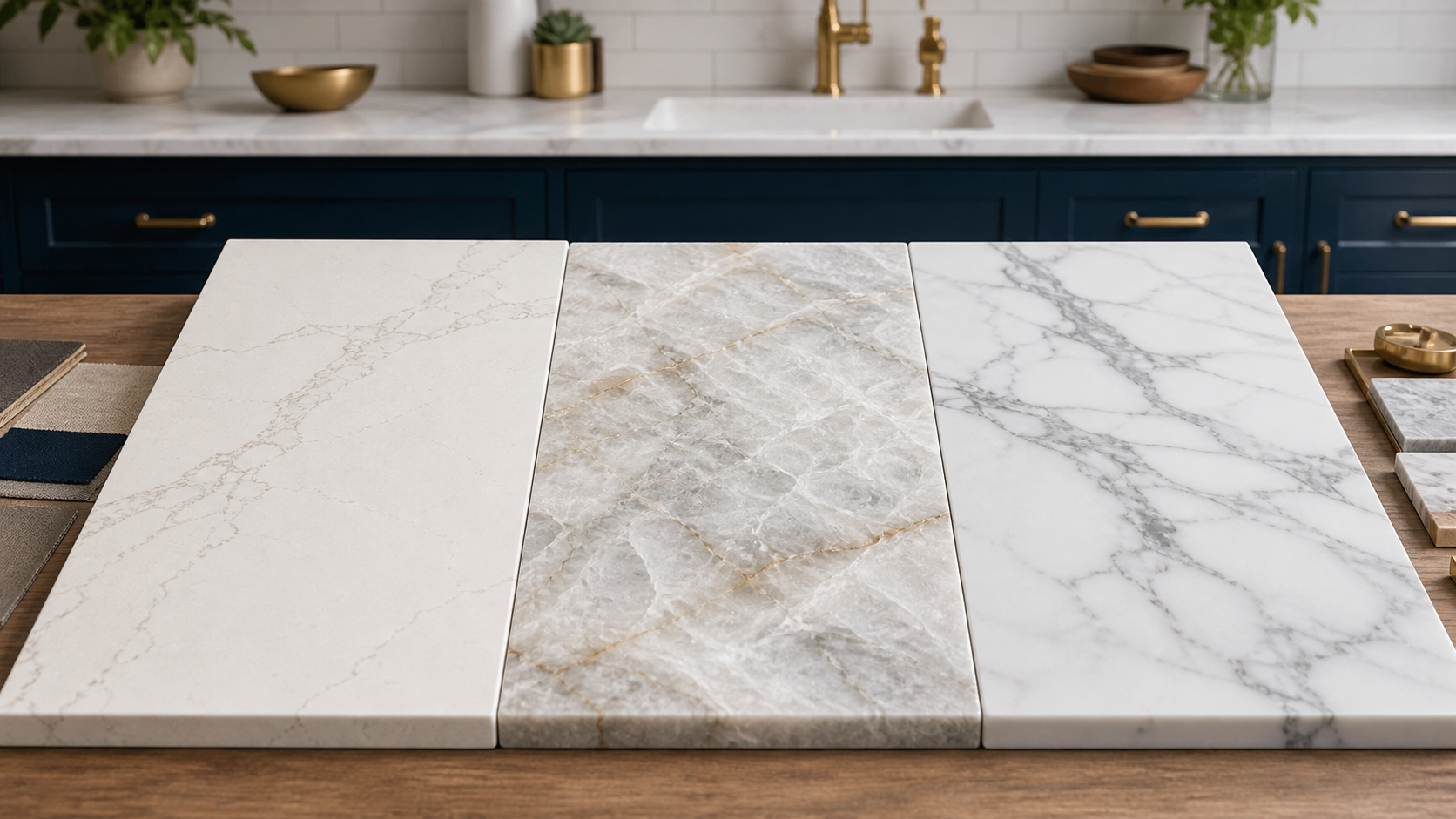
These three get confused constantly, and stone yards do not always clear it up, because the names sound alike and a salesperson may call anything pretty “marble.” The differences are real and they decide how your counter lives for the next twenty years. Here is the straight comparison, from people who specify all three.
What’s the difference?
Quartz is man-made: ground natural quartz bound with resin, so it is nonporous and consistent. Quartzite is 100% natural stone, formed from sandstone, extremely hard and heat-resistant. Marble is also natural, a softer calcium-based stone prized for its veining. The key split: quartz is engineered and worry-free, quartzite and marble are natural and need care, with quartzite far tougher than marble.
The naming trap matters. “Quartz” (engineered) and “quartzite” (natural) are completely different materials despite the near-identical name. And many stones sold loosely as “marble” or “white stone” are actually quartzite or dolomite. Always confirm what a slab actually is before you fall for it, because the care and durability hinge entirely on that answer.
Durability and maintenance compared
Quartz needs no sealing and resists stains and scratches, but heat can damage the resin. Quartzite resists scratches and heat exceptionally well but needs sealing once or twice a year and can etch if it is a softer variety. Marble is the most vulnerable: it etches from acids (lemon, wine), stains if unsealed, and scratches more easily, though many love the patina it develops.
| Quartz | Quartzite | Marble | |
|---|---|---|---|
| Type | Engineered | Natural stone | Natural stone |
| Sealing | Never | 1–2x per year | Often, ongoing |
| Heat resistance | Low (can scorch) | High | Moderate |
| Scratch resistance | High | Very high | Low |
| Etching / staining | Resists both | Resists (varies) | Etches & stains easily |
| Look | Consistent, many styles | Natural, dramatic veining | Classic, soft veining |
Note the one quartz weakness people forget: heat. Set a hot pan straight from the burner onto quartz and you can scorch or discolor the resin. Always use a trivet. Quartzite shrugs off heat; marble handles it moderately but can mark. Match the stone to your habits, not just your Pinterest board.
Which is best for a busy kitchen?
For a hard-working family kitchen, quartz is usually the smartest choice: nonporous, no sealing, and forgiving of spills and kids. If you want the depth of natural stone but still need toughness, quartzite is the upgrade, with the trade-off of periodic sealing. Save marble for lower-traffic spots, a baking station, a butler’s pantry, or a powder-room vanity, unless you welcome a lived-in patina.
We steer most clients with young families and serious cooks toward quartz on the main runs, because it removes the daily anxiety. The homeowner who loves natural stone and does not mind a yearly seal goes quartzite. Marble lovers, and there are many, are happiest when they accept up front that it will etch and patina; the people who regret marble are the ones who expected it to stay flawless. Knowing your own tolerance is the whole decision.
How each handles heat, stains, and scratches
Heat: quartzite wins, marble is moderate, quartz is weakest and needs trivets. Stains: quartz is best (nonporous), quartzite is good when sealed, marble stains if neglected. Scratches: quartzite and quartz both resist well, marble is softest. Etching from acids only affects the natural stones, and marble most of all. There is no perfect stone, only the right trade-off for you.
This is the crux: every stone trades one strength for another. Quartz buys you stain and scratch resistance at the cost of heat tolerance. Quartzite buys you heat and scratch resistance at the cost of sealing. Marble buys you unmatched beauty at the cost of daily care. Decide which trade-off you can live with cheerfully, and the choice makes itself. This is exactly the kind of call a designer makes with you, and it ties into avoiding the broader kitchen mistakes people regret.
Which should you choose?
Choose quartz if you want zero maintenance and a busy, kid-friendly kitchen. Choose quartzite if you want genuine natural stone that can take heat and daily use, and you will seal it once or twice a year. Choose marble if its beauty is non-negotiable and you accept the patina and care. Your tolerance for upkeep, not the price tag, should drive the decision.
One more practical note for Northern Virginia kitchens: always view the actual full slab, not a small sample, because natural stone varies wildly across a single slab and the movement you fall for in a 4-inch chip may not represent the whole piece. Once the counter is settled, the backsplash gets much easier, which is why we cover how to pair a backsplash with your cabinets and counter next.
Pick the stone you will love in ten years
Shea Studio Interiors helps Northern Virginia homeowners match the right countertop to how they actually live, then designs the whole kitchen around it.
Frequently asked questions
Is quartz or quartzite better for countertops?
It depends on your priorities. Quartz is engineered, never needs sealing, and resists stains and scratches, but can scorch from heat. Quartzite is natural stone that handles heat and scratches better but needs sealing once or twice a year. Quartz for zero maintenance; quartzite for natural stone that can take heat.
Does marble countertop stain and etch easily?
Yes. Marble is a soft, calcium-based stone that etches from acids like lemon juice and wine and can stain if unsealed. Many homeowners embrace the resulting patina as character, but if you want a counter that stays pristine with little care, marble is not the easiest choice.
Can you put hot pans on quartz?
No, not directly. Quartz is bound with resin that can scorch or discolor under high heat, so always use a trivet or hot pad. If you frequently set hot cookware straight down, quartzite or another natural stone handles heat far better than engineered quartz.
Is quartzite the same as quartz?
No, despite the similar name they are different materials. Quartz is engineered from ground stone and resin. Quartzite is 100% natural stone formed from sandstone. Quartzite is harder and more heat-resistant but needs sealing; quartz is maintenance-free but heat-sensitive. Always confirm which one a slab actually is.
Which countertop adds the most resale value?
Both quartz and natural stone like quartzite are seen as premium and support resale, especially in a competitive market like Northern Virginia. Buyers respond to quality, durable stone in a cohesive kitchen more than to a specific material, so choose the one that fits your life and budget well.
or call 703-891-1570