
New construction · Northern Virginia
When Should You Hire an Interior Designer for New Construction?
Hire an interior designer for new construction as early as possible, ideally during the architectural and framing stage and well before your builder’s design-center appointment. Early involvement lets the designer fix layout, lighting, and outlet decisions on paper, when changes are free, instead of after drywall, when the same changes cost thousands.
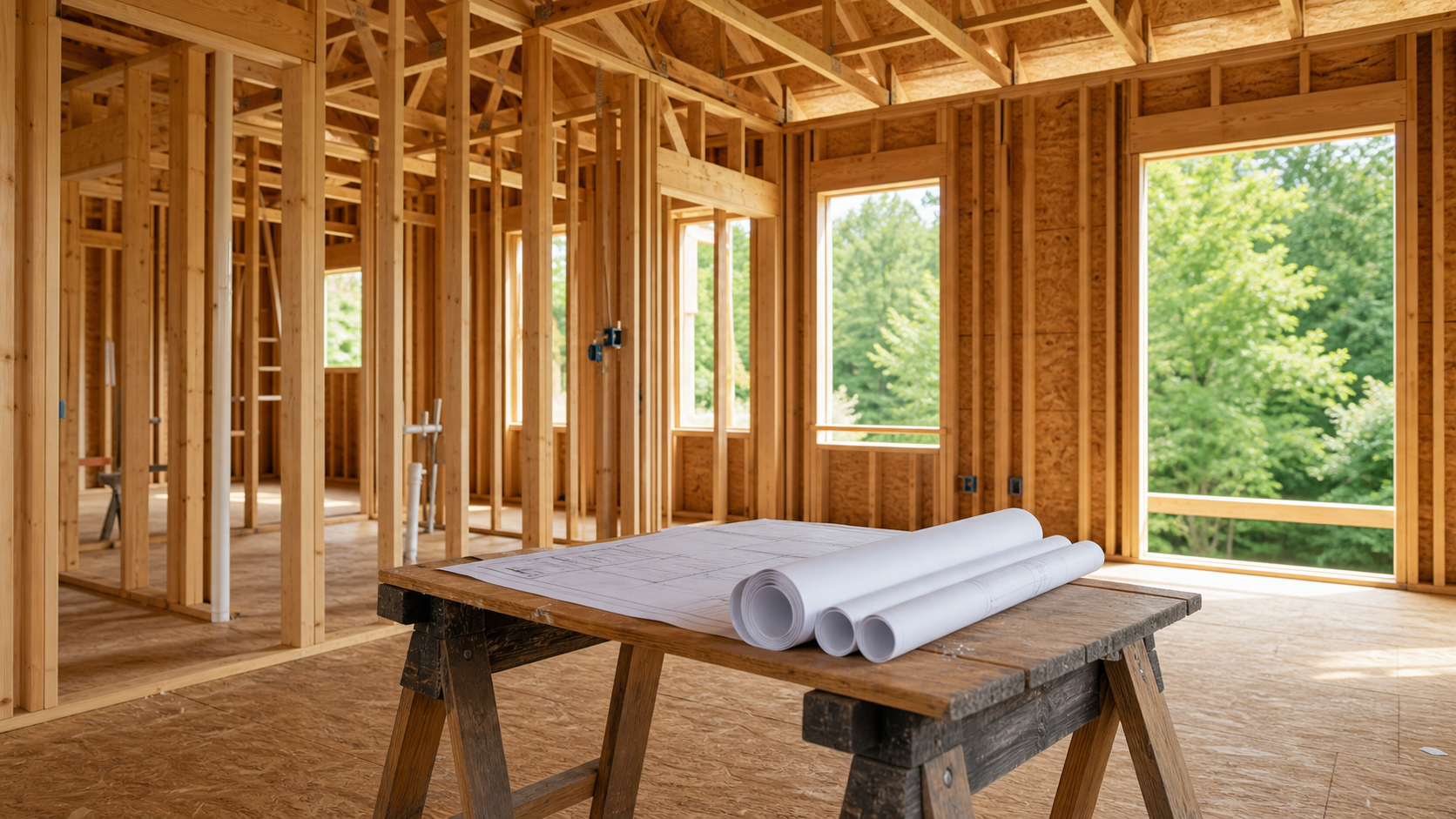
Almost everyone hires the designer too late. They wait until the house is built and the keys are in hand, then call someone to “help with furniture,” and discover the kitchen island is a foot too small and there is no outlet where the console needs to go. The single best decision in a new build is bringing design in early. Here is the timeline that actually saves money.
When in the build should a designer get involved?
The ideal window is during design and pre-construction, before framing is finalized and before the builder’s design-center appointment. That is when a designer can still influence room sizes, window placement, ceiling details, lighting layouts, and outlet locations. Once those are framed and wired, changing them means demolition, not a design tweak.
Think in stages. Plans and pre-construction is the prime window, when layout and structure are still on paper. Framing is the last easy moment to move a wall or add a window. The design-center appointment is when finishes lock. After drywall, you are decorating, not designing. The earlier you enter that sequence, the more a designer can actually change.
Why does early matter so much?
Because the cost of a change climbs steeply through the build. Moving an outlet on a plan costs nothing. Moving it after rough-in costs an electrician’s visit. Moving it after drywall and paint means cutting open a finished wall. The same decision gets more expensive at every stage, so the value of a designer is highest at the very beginning.
This is the part builders rarely spell out. A wall that is free to relocate during planning can cost real money to move during framing and become impractical after drywall. Lighting is the classic miss: recessed cans, sconces, and switch locations all get roughed in early, and “we’ll figure out lighting later” almost always means living with a flat, badly planned ceiling. A designer who is in the room during planning prevents the regrets that are otherwise permanent.
What does a designer do at each stage?
Pre-construction: refine the floor plan, room proportions, and storage. Framing: confirm window, wall, and ceiling details and the lighting and outlet plan. Design center: steer finish selections and flag builder upgrades worth taking. Finishing and move-in: select cabinetry hardware, fixtures, furniture, and styling. Each stage has decisions that are far cheaper to get right then than to fix later.
Here is the rough sequence of where a designer earns their fee:
- Pre-construction. Floor plan tuning, room scale, storage, and how the house actually lives.
- Framing. Windows, ceiling treatments, the full lighting and electrical plan, niche and built-in rough-ins.
- Design center. Guiding finishes and telling you which builder upgrades are worth it (see our design-center upgrade guide).
- Finishing. Cabinetry detail, hardware, fixtures, paint, then furniture and the final styled rooms.
What does it cost to change a decision mid-build?
It escalates fast. A layout or lighting change is essentially free on paper, modest during framing, and expensive once walls are closed, because it now involves demolition, new rough-in, and refinishing. This is exactly why early design pays for itself: one avoided post-drywall change often covers a meaningful share of the design fee.
You do not need a price list to see the logic. Every decision that touches structure, plumbing, or electrical gets dramatically more expensive the moment it is buried behind finished surfaces. The homeowners who tell us “I wish we’d called you sooner” are almost always the ones who hired late and are now paying to undo framed-in decisions. Early design is the cheapest insurance in the whole project, and it pairs directly with deciding builder options versus your own designer.
Is it ever too late?
It is never too late to improve a home, but it gets less efficient. After move-in, a designer can still transform a space with furnishings, lighting fixtures, window treatments, and styling. What is lost is the cheap window to fix layout, structure, and rough-ins. So later is fine for decorating; earlier is essential for anything behind the walls.
If your house is already built, do not despair, and do not assume design can’t help. Plenty of our favorite projects started after move-in. You just shift the focus to what is still changeable: scale and arrangement of furniture, layered lighting, window treatments, and the cohesive material story that makes a builder house feel custom. If you are still in planning, though, call now. The clock on the cheap decisions is already running.
Building soon in Northern Virginia?
The earlier we talk, the more we can do. Shea Studio Interiors has guided new builds across NoVA and Metro DC for 30+ years, from the floor plan to the final lamp.
Frequently asked questions
How early should I hire an interior designer for a new build?
During design and pre-construction, before framing is finalized and before your design-center appointment. That window lets a designer influence layout, windows, ceilings, lighting, and outlets while changes are still free, which is where the biggest savings and best results come from.
Can a designer change my floor plan before it’s built?
Often yes, if they are involved during planning. A designer can refine room proportions, storage, sight lines, and how spaces connect before the plan is locked. Once framing is underway, structural changes become costly, so the time to adjust the plan is early.
Do I need both an architect and an interior designer for a custom build?
For a custom home, frequently yes. The architect handles the structure and envelope; the designer handles how the interior lives, the finishes, and the lighting. They work best in parallel, and a designer will tell you when the architect needs to weigh in on a change.
Should I hire the designer before the builder’s design center appointment?
Yes. Arriving at the design center with a designer and a plan changes the whole appointment. You will know which upgrades are worth taking through the builder and which to skip and do better later, instead of making fast, expensive decisions under pressure.
Is it worth hiring a designer if my house is already framed?
Yes, though you have missed the cheapest window for layout and rough-in changes. A designer can still influence finishes, lighting fixtures, cabinetry detail, and the whole furnishing plan. The sooner you bring them in after framing, the more options remain open.
or call 703-891-1570