
Kitchen design · Northern Virginia
What Backsplash Goes With Your Cabinets (and Which to Pick First)
Pick your cabinets and countertop first, then the backsplash, because the backsplash is the easiest of the three to coordinate to the other two. Let the busiest surface lead: if the counter is dramatic, keep the backsplash simple; if cabinets and counters are quiet, the backsplash can be the star. Match undertones, not exact colors.
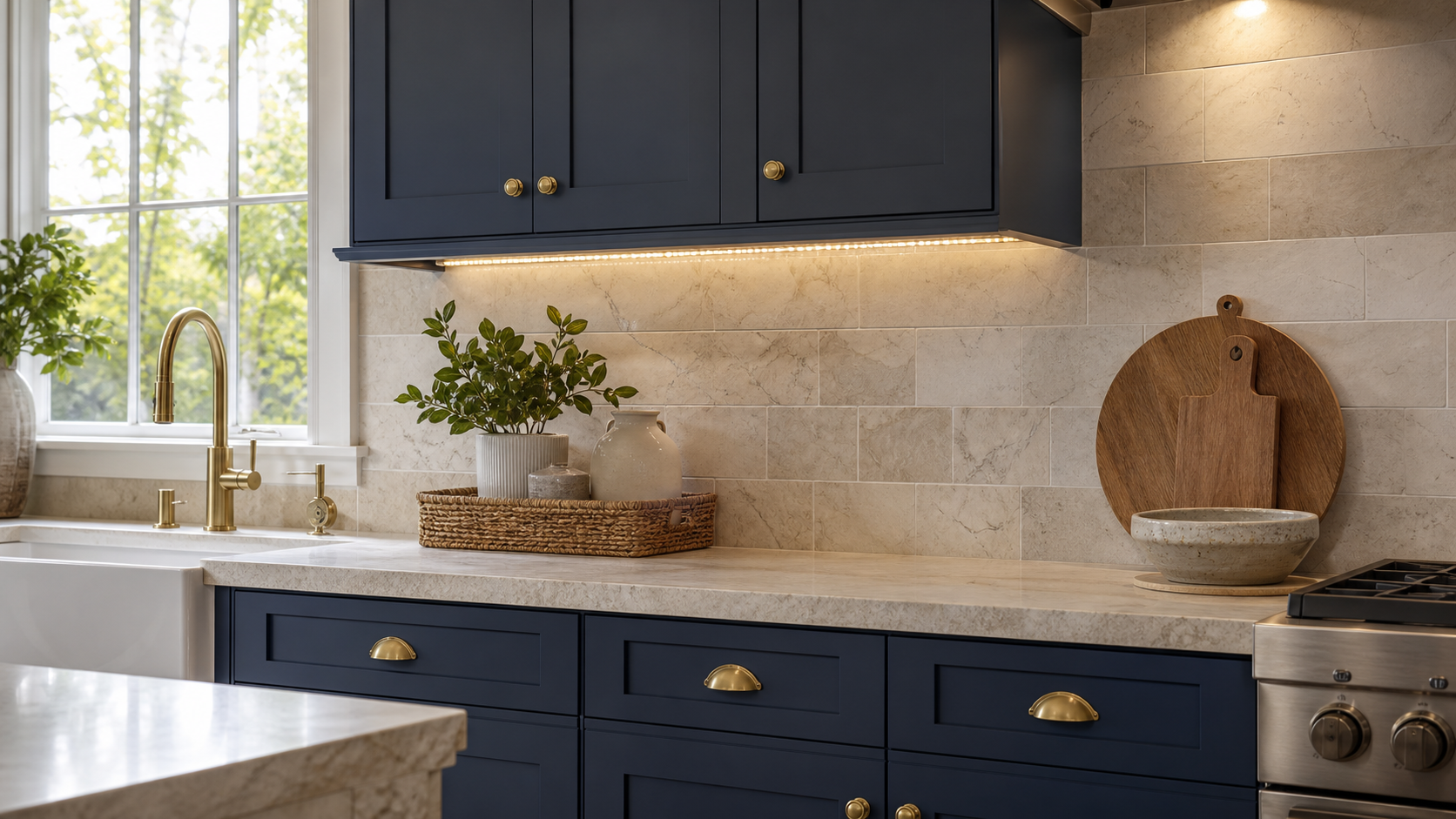
The backsplash trips people up because they choose it in the wrong order and try to match colors that should only relate. It is one of the most-asked kitchen questions for good reason: it ties the whole wall together or quietly ruins it. The rules below are the ones we actually use when specifying a kitchen.
Should you pick cabinets, counter, or backsplash first?
Choose cabinets first, then the countertop, then the backsplash last. Cabinets are the largest visual mass and the longest lead time, the counter is the next biggest commitment, and the backsplash has the widest range of options, so it is easiest to coordinate to the first two. Working in this order keeps the small, flexible choice from boxing in the big ones.
The logic is about flexibility and cost. Cabinets set the kitchen’s character and take the longest to order. Counters are a major material decision with fewer forgiving options. The backsplash, by contrast, comes in thousands of tiles at every price, so it is the easiest piece to make agree with the other two. Choose the backsplash first and you have handcuffed your biggest decisions to your smallest one.
How do you match a backsplash to your cabinets?
Match undertones, not exact colors. Warm cabinets (cream, oak, greige) pair with warm-toned tile; cool cabinets (crisp white, gray, navy) pair with cool tile. Then decide the role: a backsplash can blend (tile close to the cabinet or counter color) for a calm look, or contrast for impact. Pick one surface to be the star and let the others support it.
The undertone test saves more kitchens than any other tip. A “white” subway tile can read cool blue-white or warm cream, and the wrong one against your cabinets looks subtly off in a way people feel but cannot name. Hold the tile against the actual cabinet and counter samples, in your kitchen’s light, before you commit. Then make a deliberate call: calm and blended, or one bold feature. Trying to make everything a statement is the usual misfire.
White, two-tone, and dark cabinets
White cabinets are the most flexible and take almost any backsplash, from classic white tile to bold pattern or natural stone. Two-tone kitchens look best when the backsplash bridges the two cabinet colors. Dark cabinets pair beautifully with lighter backsplashes for contrast, or tonal dark tile for a dramatic, enveloping look.
Quick pairings that reliably work:
- White cabinets. Nearly anything works; use the backsplash as your chance for personality or keep it timeless.
- Two-tone (e.g. navy base, white uppers). Choose a backsplash that picks up a tone from each so the two colors feel intentional.
- Dark or wood cabinets. Lighter stone or tile adds contrast and breathing room; tonal dark tile reads moody and luxe.
Should the backsplash match the countertop?
It should coordinate, not necessarily match. Running the same stone up the wall as a slab backsplash is a luxe, seamless look that works beautifully behind a range. But if your counter is busy or veined, a simpler backsplash keeps the kitchen from feeling chaotic. The rule: let the busiest surface lead, and keep the others quieter.
A dramatic veined quartzite counter is gorgeous, but pair it with an equally busy patterned tile and the eye has nowhere to rest. In that case, a simple backsplash, or a slab of the same stone for continuity, is the move. If your counter is quiet, that is your cue to let the backsplash be the personality of the kitchen. This decision is much easier once the countertop is settled, which is why our countertop comparison is worth reading first.
How high should the backsplash go?
Standard backsplashes run from the counter to the bottom of the upper cabinets, about 18 inches. Behind the range or a focal wall, taking the tile to the ceiling or hood looks more custom and modern. Avoid a short 4-inch counter-height backsplash, which reads dated. Full-height behind the range is the most current, intentional look.
The 4-inch backsplash that matches the counter was standard for decades and now dates a kitchen instantly. The current, more custom approach is full height: tile from the counter to the underside of the cabinets across the runs, and all the way to the ceiling or hood behind the range, which becomes a natural focal point. It costs a bit more in tile and labor and looks substantially more finished. While you are sweating these details, it is worth knowing the broader kitchen mistakes people regret so the wall is not the only thing you get right.
Get the kitchen wall right
Cabinets, counters, and backsplash should feel like one decision, not three. Shea Studio Interiors specifies kitchens across Northern Virginia that read effortless because the details actually agree.
Frequently asked questions
Do I pick the backsplash or the countertop first?
Countertop first, backsplash last. The counter is a bigger, less flexible commitment with fewer forgiving options, while the backsplash comes in thousands of tiles at every price. Choosing the counter first lets you coordinate the easy, flexible backsplash to it, not the other way around.
Should my backsplash match my cabinets exactly?
No, match undertones rather than exact colors. Warm cabinets want warm-toned tile and cool cabinets want cool tile. Then decide whether the backsplash blends for calm or contrasts for impact. Exact matching is unnecessary and can look flat; coordinated undertones look intentional.
What backsplash works with white cabinets?
Almost anything, which is why white cabinets are so popular. You can keep it timeless with white or marble-look tile, or use the backsplash as the kitchen’s personality with color, pattern, or natural stone. Just confirm the tile’s undertone matches your specific white in your kitchen’s light.
Should the backsplash go to the ceiling?
Behind the range or on a focal wall, taking tile to the ceiling or hood looks custom and current. On standard runs, counter-to-upper-cabinet height (about 18 inches) is the norm. Avoid the dated 4-inch counter-height strip. Full-height behind the range is the most modern, finished choice.
Can I use the same stone as my countertop for the backsplash?
Yes, a slab backsplash in the same stone, especially behind the range, gives a seamless, luxe look with no grout lines to clean. It works best when the stone is the feature and the rest of the kitchen stays quiet. With a very busy stone, limit it to the range wall to avoid overload.
or call 703-891-1570