Northern Virginia Design Investment Guide
How Much Does Full-Service Interior Design Cost in Northern Virginia?
Full-service interior design cost in Northern Virginia depends on the rooms involved, construction scope, level of customization, furnishings, procurement responsibility, site coordination, and the time required to carry the design from concept through installation. A meaningful proposal separates professional design fees from construction, furnishings, freight, delivery, and installation.

TL;DR: There is no honest single price for full-service design without a defined home and scope. A furnishing plan for completed rooms is different from a kitchen renovation, whole-home remodel, or new construction project. Begin with priorities, existing conditions, an investment range, and decision makers. Then compare proposals by phase, deliverable, procurement responsibility, and exclusions.
- Separate design fees, construction, furnishings, freight, receiving, delivery, and installation.
- Define the rooms and decisions included before comparing proposals.
- Building type, jurisdiction, access, and contractor coordination change the work.
- Custom furnishings and long-lead materials require earlier decisions and more procurement management.
- Compare the full service and decision process, not only the fee format.
Full service describes responsibility, not one package price
Full-service design can include programming, measurements, space planning, concept development, finish selections, construction documentation, lighting, plumbing and hardware specifications, furnishings, procurement, contractor coordination, site review, receiving, delivery, and installation. The exact mix depends on the project.
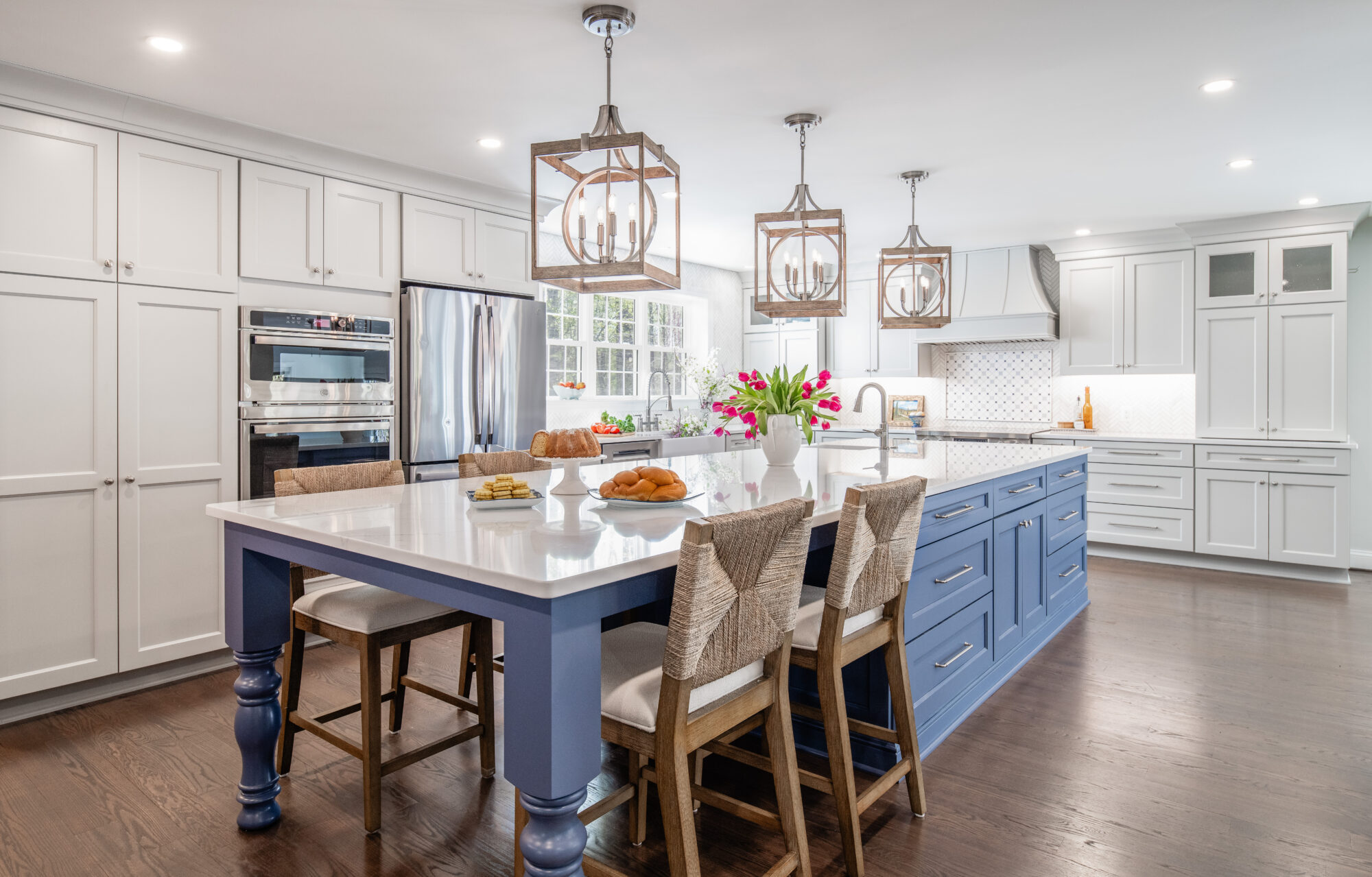
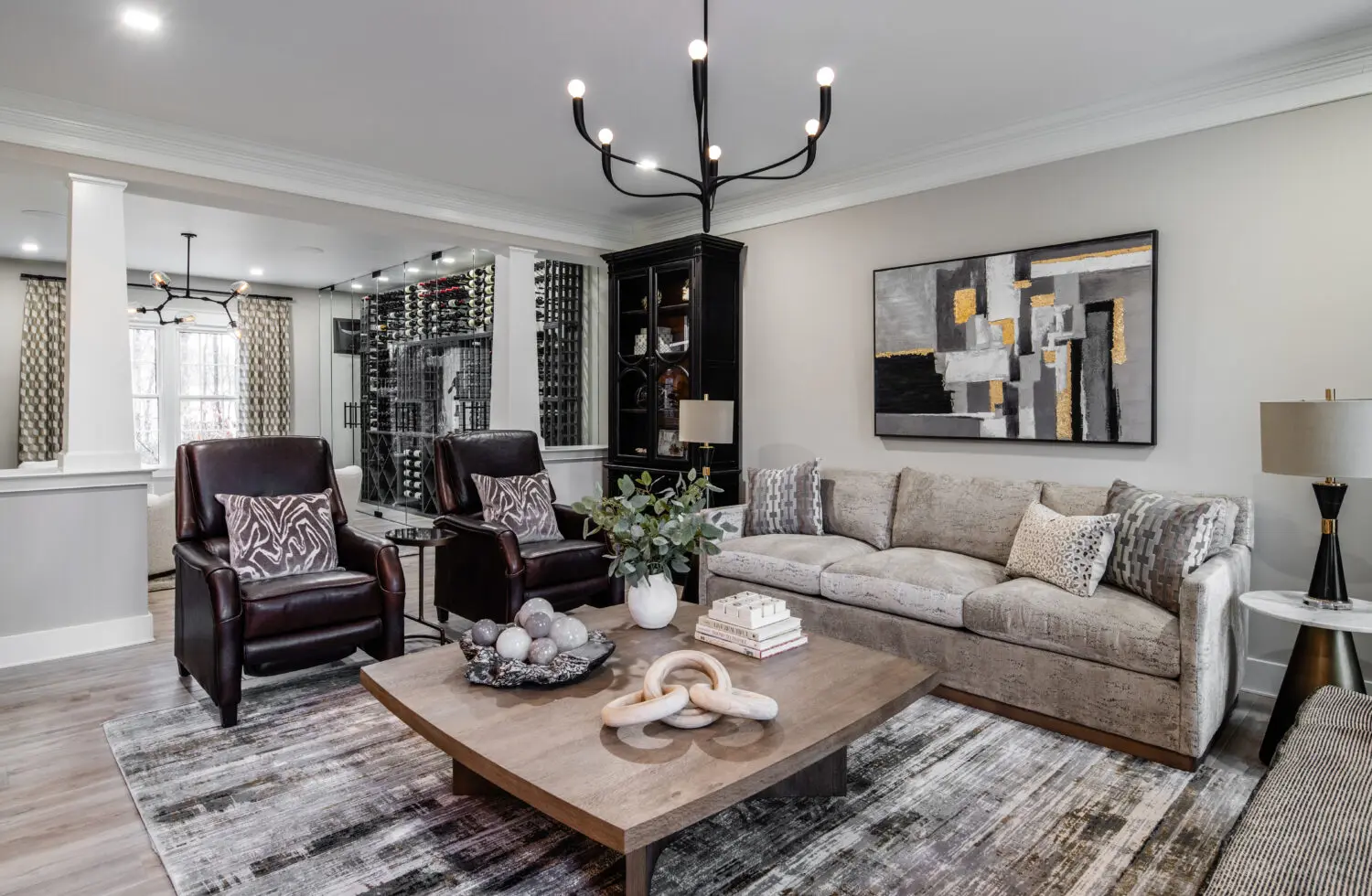
Furnishing a completed Great Falls living room may require layout, upholstery, lighting, rugs, window treatments, art, purchasing, and installation. A McLean kitchen renovation may add demolition decisions, cabinetry, appliances, plumbing, electrical, tile, stone, permits, and months of contractor coordination. Both are design projects, but they should not share a generic price. Shea Studio’s full-service interior design page describes the level of support a proposal should match.
Separate the major budget categories
| Category | What it can include | Question to clarify |
|---|---|---|
| Professional design | Concepts, plans, specifications, documentation, and meetings | Which phases and revision rounds are included? |
| Construction | Labor, trades, permits, site protection, and installed materials | Who estimates and contracts the work? |
| Furnishings | Furniture, rugs, lighting, art, accessories, and window treatments | What quality and customization level is planned? |
| Procurement | Quoting, ordering, tracking, claims, and vendor coordination | Who purchases and owns vendor communication? |
| Logistics and installation | Freight, receiving, storage, delivery, placement, and styling | Which items are allowances or separate charges? |
This separation prevents an attractive furniture allowance from being mistaken for the complete investment. Freight, receiving, storage, white-glove delivery, and installation can be material parts of a project with custom or trade furnishings.
How design fees may be structured
Design firms may use a fixed fee by phase, hourly billing, a retainer, procurement compensation, a percentage tied to an agreed cost basis, or a combination. The structure should fit how predictable the scope is. A fixed fee is easier to establish when rooms, deliverables, revisions, and construction involvement are known. Hourly work can fit open-ended consultation or approved additional services.
Ask what triggers additional service. A new room, revised layout after approval, contractor redesign, delayed decision, or extended construction schedule may change the work. The proposal should define the approval process before the project is under pressure.
Northern Virginia location affects execution
Northern Virginia is not one building context. Arlington and Alexandria projects may involve older homes, compact access, condominium rules, or limited staging. Fairfax County contains established neighborhoods, additions, and whole-home renovations. Ashburn and Leesburg include new construction as well as renovations. The applicable jurisdiction, HOA, condominium association, or property manager may add work-hour rules, elevator reservations, insurance documents, or material approvals.
A proposal should state whether the designer manages these requirements, coordinates with the contractor, or relies on the homeowner. Existing conditions also matter. Floor levels, electrical capacity, plumbing, structure, moisture, and prior alterations can change what is feasible after investigation.
Furnishing quality and procurement shape the total
The cost difference between retail furniture, trade furnishings, made-to-order upholstery, custom cabinetry, artisan lighting, and commissioned pieces is not only the object. Custom selections can require drawings, samples, finish approvals, longer lead times, specialized delivery, and installation.
Procurement can include quote review, purchase orders, tracking, damage claims, receiving, storage, delivery coordination, and installation planning. Ask who handles an item that arrives damaged, a finish that differs from the sample, or a construction opening that changes. Also ask how approvals are documented before an order becomes noncancelable.
Build an investment range before design begins
An investment range is a planning boundary, not a demand to spend every dollar. It lets the team test whether the desired construction, furnishing quality, and service level can coexist. If they do not, the project can be phased, construction reduced, existing pieces retained, or lower-priority items postponed before drawings and selections are complete.
For renovation-specific planning, review Shea Studio’s guides to Northern Virginia kitchen remodeling and bathroom renovations. The guide to whether hiring an interior designer is worth it can help identify where professional coordination has the most value.
Compare proposals by phase and ownership
Put each proposal into the same sequence: discovery, concept, design development, documentation, procurement, construction support, and installation. Note the deliverable and approval at the end of each phase. One firm may include elevations and site coordination while another includes concept selections only. One may manage purchasing and damage claims while another provides shopping links.
Also compare who leads meetings, produces drawings, visits the site, and resolves questions. The answer should match the engagement being offered. A hybrid model needs especially clear boundaries because homeowner purchasing transfers responsibility rather than eliminating it.
Frequently asked questions
Can Shea Studio quote a full-service project before seeing the home?
A useful proposal needs enough information about the property, rooms, construction, furnishings, service level, schedule, and decision makers to define the scope.
Are furnishings included in the design fee?
Not necessarily. Professional design, furnishings, construction, freight, receiving, delivery, and installation should be identified separately in the proposal.
Why does procurement carry a cost?
Procurement can include quoting, approvals, ordering, tracking, vendor communication, damage claims, receiving, storage, delivery, and installation coordination.
Does a larger investment range mean every dollar will be spent?
No. A range helps the team allocate priorities and test feasibility. Approved selections and contracts determine actual commitments.
What makes two design proposals difficult to compare?
Different deliverables, revision limits, purchasing responsibilities, site involvement, and exclusions can make similar-looking fees represent very different services.
Define the scope before the number
Share the home, rooms, priorities, construction plans, timing, and investment range so the studio can determine the right level of service.