
Interior Design · Northern Virginia
How to Choose the Right Sofa for Your Living Room
The sofa is usually the largest and most expensive single piece in a living room, so it’s worth getting it right. Start with the size: the sofa should span roughly two-thirds of the primary wall it sits against. Then choose a frame style. Then tackle fabric. In that order.
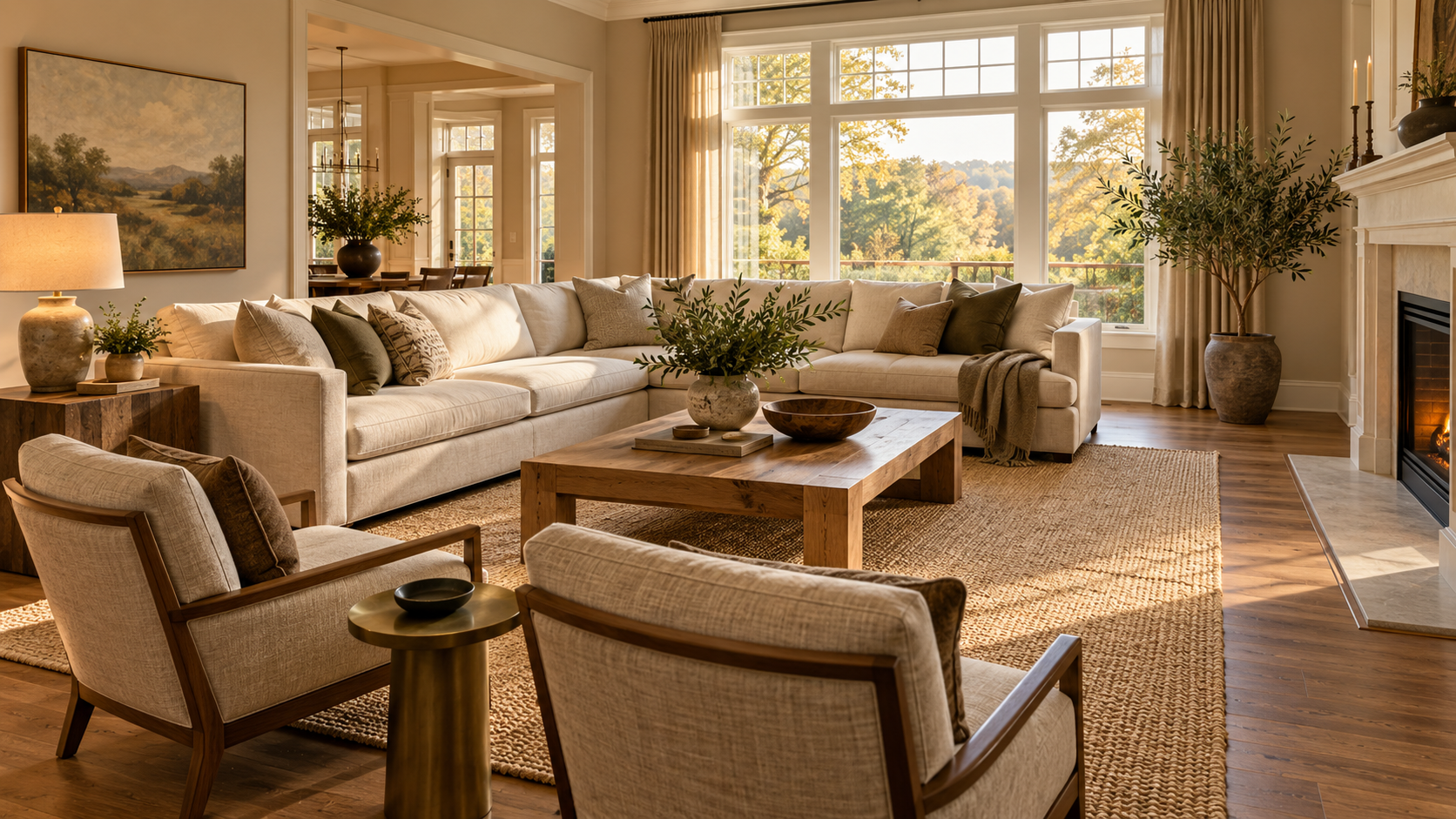
A sofa is one of the few purchases in a home that you’ll interact with every single day for the next 10 to 15 years. It’s also the piece that sets the visual tone for everything else in the room. The right sofa makes the space feel grounded and intentional. The wrong one, even a beautiful one in the wrong size or silhouette, makes the room feel like it never quite came together.
The good news is that the decision is more systematic than it feels. There’s a right order for the choices, and when you follow it, the later decisions get much easier.
Size and proportion: start with the room, not the sofa
Before looking at any sofa options, measure the wall the sofa will sit against and the clear floor space in front of it. The sofa length should span roughly two-thirds of the primary wall. Leave 18 inches of clearance between the sofa and the coffee table. Leave at least 36 inches (preferably 42 to 48 inches) between the sofa and any wall or piece of furniture opposite it for comfortable traffic flow.
The two-thirds rule is one of the most reliable proportion guidelines in furniture selection. A sofa that spans the full length of the wall makes the room look crowded and gives it nowhere to breathe. A sofa that’s much shorter than two-thirds of the wall looks undersized and adrift. In a 14-foot living room with a sofa wall that runs 12 feet, a sofa between 90 and 96 inches (7.5 to 8 feet) is in the right range.
Seat depth matters for personal proportion as much as room proportion. Standard seat depth runs 21 to 24 inches from the front edge of the cushion to the back of the seat. That range works for most adults of average height. If you’re taller than 6 feet, a 24-inch seat depth gives you a more comfortable sitting position. If you’re shorter than 5’4″, a deeper sofa may leave you perching near the front edge because your feet don’t reach the floor from a deeper seat. Modular sofas with adjustable configurations are useful here because you can set different sections to different depths.
The 18-inch clearance between sofa and coffee table is practical, not arbitrary. It’s close enough to reach your coffee cup without leaning far forward, and far enough to cross the space without bumping your shins. Less than 15 inches feels cramped. More than 24 inches makes the table feel disconnected from the seating group.
Frame profiles: the silhouette sets the style
Frame style is the second decision. The profile of the sofa, including its back height, arm shape, and seat cushion type, determines what design language the room speaks. A rolled arm reads traditional. A track arm reads contemporary. A low, tight back reads modern. A higher back with loose cushions reads comfortable and relaxed. Choose the frame before choosing fabric, because a beautiful fabric on the wrong frame is still the wrong sofa.
| Frame Profile | Design Language | Best Suited For | Tradeoffs |
|---|---|---|---|
| Track arm (square arm) | Contemporary, transitional | Clean-lined rooms, smaller spaces | Less plush than rolled arm styles |
| Rolled arm (English arm) | Traditional, transitional | Formal living rooms, layered spaces | Takes up more room width than the seat suggests |
| Flared arm (shelter arm) | Mid-century, modern | Rooms with architectural character | Distinctive silhouette; can date the room |
| Tight back / bench seat | Modern, architectural | Minimal rooms, high-traffic spaces | Less cozy; cushions don’t move or fluff |
| Loose cushion back | Casual, transitional, relaxed | Family rooms, everyday living rooms | Cushions need regular fluffing and resetting |
| Camelback (curved back) | Traditional, formal | Formal sitting rooms, antique-adjacent spaces | Difficult to pair with contemporary elements |
One dimension that’s easy to overlook: the overall back height and how it reads in the room. A low-back sofa (under 32 inches from the floor to the top of the back) makes ceilings feel higher and works well in open-plan spaces. A taller back (over 36 inches) provides more support and visual presence but can crowd a room with 8-foot ceilings. We see a lot of 86 to 88-inch sofas with 32 to 34-inch back heights in Northern Virginia living rooms with standard ceiling heights, and they tend to land well proportionally.
Leg visibility also shapes how the sofa reads in the room. Exposed legs, whether tapered wood or metal, allow light and visual space to pass under the sofa, which makes the room feel larger. A skirted sofa sits lower to the floor, creates a heavier visual presence, and reads more traditional. Neither is wrong, but a skirted sofa in a small room can make the room feel heavier than it is. An exposed-leg sofa in a small room makes the same floor space feel more open.
Fabric choices: performance, feel, and longevity
Fabric is the third decision, after size and frame. The right fabric for your sofa depends on how the room is actually used: formal living room visited occasionally, family room used daily by children and pets, or something in between. Performance fabrics have improved dramatically and can now look as refined as natural weaves. Leather is the most durable option for high-traffic homes. Velvet reads luxurious but requires more care.
Performance fabrics (including Crypton, Sunbrella upholstery, and proprietary treatments like Perennials) are now the standard recommendation for any sofa that will see regular daily use, particularly in homes with children or pets. The weave patterns and textures available in performance fabric today are nearly indistinguishable from natural linen or cotton at a distance, and many hold up to a 15,000 to 30,000 double-rub abrasion standard. If you’re spending significantly on a sofa and want it to last, performance fabric is worth the additional cost over a natural weave that won’t hold up to regular use.
Linen and linen blends look beautiful and breathe naturally. They work best in lower-traffic spaces, formal living rooms, or rooms that don’t see daily heavy use. Pure linen wrinkles and can be difficult to clean. A linen-polyester blend (typically 55/45 or 70/30) gives you most of the look with meaningfully better durability. If the room is primarily for adult use and occasional company, linen reads effortlessly elegant and is worth considering.
Velvet reads rich and warm and works especially well in navy, forest green, and dusty rose. It shows impressions from sitting and needs regular brushing in one direction to maintain its pile, but it’s more durable than most people expect. A high-quality velvet with tight pile density (meaning the pile doesn’t easily crush permanently) is a viable choice for a frequently used sofa. We use velvet in a lot of our Northern Virginia projects where clients want a room that feels like a room rather than a furniture showroom.
Leather is the most practical choice for homes with children and pets. It doesn’t hold odors, it wipes clean easily, it develops a patina that improves over time rather than showing wear negatively, and it tends to outlast fabric by years. The tradeoffs: it’s warm in summer without air conditioning, it can feel cold in winter, and quality leather at the right scale is expensive. A full-grain leather sofa in a caramel or cognac tone brings warmth and longevity that’s hard to match.
Color, the 60-30-10 rule, and where the sofa fits in
In a living room, the sofa typically occupies your 30 percent, the secondary color in the 60-30-10 framework. The walls and floor are your 60 percent. Pillows, throws, and accent pieces are your 10 percent. A sofa that tries to be all three things (high contrast, patterned, very colorful) competes with the rest of the room rather than anchoring it. A sofa that reads as a grounded secondary tone holds the room together.
The most versatile sofa colors are the ones that commit to a tone without being extreme. A warm oatmeal or camel linen gives you maximum flexibility with accent colors. A deep navy or charcoal velvet makes a clear statement and limits the palette in a productive way, because it decides what goes with it. A bright or highly saturated sofa makes every other decision harder because so much of the room’s color energy is already committed to one piece.
Neutral sofas don’t mean boring sofas. A sofa in a well-chosen greige or natural linen with excellent cushion proportion, visible legs, and the right scale reads as confident and composed. The character comes from the texture of the fabric, the profile of the frame, and the pillow styling, not from a bold color that demands your attention.
For the full framework on how color works across a room, see our guide to the 60-30-10 color rule.
How the sofa relates to the rug and coffee table
The sofa, the rug, and the coffee table form a group that should be sized together. The rug should be large enough that at least the front two legs of the sofa sit on it. The coffee table should be roughly two-thirds the length of the sofa. A coffee table that’s too small looks like it doesn’t belong to the sofa; one that’s too large makes the seating group feel trapped.
Rug sizing is one of the most common mistakes in living room design, and the sofa is the reference point. In a typical living room seating group, the rug should extend at least 18 inches beyond each side of the sofa, and the front legs of the sofa (and the adjacent chairs) should sit on the rug. An all-legs-off approach works only in smaller rooms where a large enough rug would overwhelm the space. An all-legs-on approach works well in open-plan spaces. For specific sizes by room, see our area rug size guide.
The coffee table proportion follows a similar logic. A 90-inch sofa needs a coffee table that’s 55 to 62 inches long. A table shorter than 50 inches in front of a 90-inch sofa looks like it was grabbed from another room. An oval or round coffee table can break the proportion rule a little because it doesn’t have the same strong horizontal read as a rectangular table, but it should still be within a similar size range. For the full framework on arranging furniture around a fireplace and TV, see our guide to living room furniture arrangement.
Furniture scale and proportion extend beyond the sofa to every piece in the room. Our furniture scale guide covers how to size and proportion every piece in relation to the room’s architecture and the other furniture in it.
Want help choosing the right sofa?
A sofa is a long-term investment in your daily comfort and your home’s visual character. Our team helps Northern Virginia homeowners choose the right size, frame, and fabric for the space. Let’s start with your room.
Frequently asked questions
What size sofa do I need for my living room?
The most reliable starting point is the two-thirds rule: the sofa length should span roughly two-thirds of the primary wall it will sit against. Measure the full wall, then aim for a sofa between 60 and 70 percent of that length. For traffic flow, leave at least 36 inches between the sofa and any wall or furniture piece opposite it, and 18 inches between the sofa and the coffee table.
What seat depth is most comfortable?
For most adults, a seat depth of 21 to 24 inches is comfortable. Taller people (over 6 feet) often prefer 24 inches or slightly deeper. Shorter people (under 5’4″) may find a deeper seat uncomfortable because their feet don’t reach the floor from a fully reclined position. If multiple people of different heights will use the sofa regularly, a 22-inch seat depth is a good middle point.
Is a skirted sofa or a sofa with legs better for a small room?
A sofa with exposed legs is almost always the better choice in a small room. Visible legs allow light and visual space to pass under the sofa, which makes the floor area feel more open and the room feel less heavy. A skirted sofa lands all the way to the floor and creates a more enclosed visual mass. The difference is noticeable in a room under 200 square feet.
What’s the most durable sofa fabric for everyday use?
Performance fabrics, including brands like Crypton, Sunbrella (interior line), and Perennials, are the most durable for daily use, particularly in homes with children or pets. They resist staining and abrasion while offering the visual appearance of natural weaves. Full-grain leather is also extremely durable and often outlasts fabric. For light-use spaces, a quality linen blend is a beautiful choice that holds up reasonably well.
Should the sofa color match the walls?
Not necessarily. In the 60-30-10 framework, the walls (and floor) are your dominant 60 percent tone, and the sofa is typically your 30 percent secondary tone. They should be in the same color family or at least agree in undertone, but an exact match often makes the room feel monotone and flat. A sofa that’s slightly richer or warmer than the wall color reads more grounded and interesting than one that disappears into it.
How do I know if a sofa will fit through my front door or up the stairs?
Measure the diagonal of your door frame opening (corner to corner), not just the width. Most sofas can be tilted to pass through a door opening whose diagonal exceeds the sofa’s overall depth. For stairs and hallways, measure the height and width of every turn. Sectionals and modular sofas are generally the most practical for tight entries because the pieces come in separately. Many furniture companies also offer “apartment-size” and two-piece back configurations for exactly this reason.