
Layout & new construction · Northern Virginia
How to Design and Zone an Open-Concept Floor Plan
Design an open-concept floor plan by defining zones without walls: anchor each area with a large area rug, orient furniture to create soft boundaries, repeat a few materials and colors for cohesion, and plan layered lighting for each zone. The goal is one connected space that still reads as distinct living, dining, and kitchen areas.
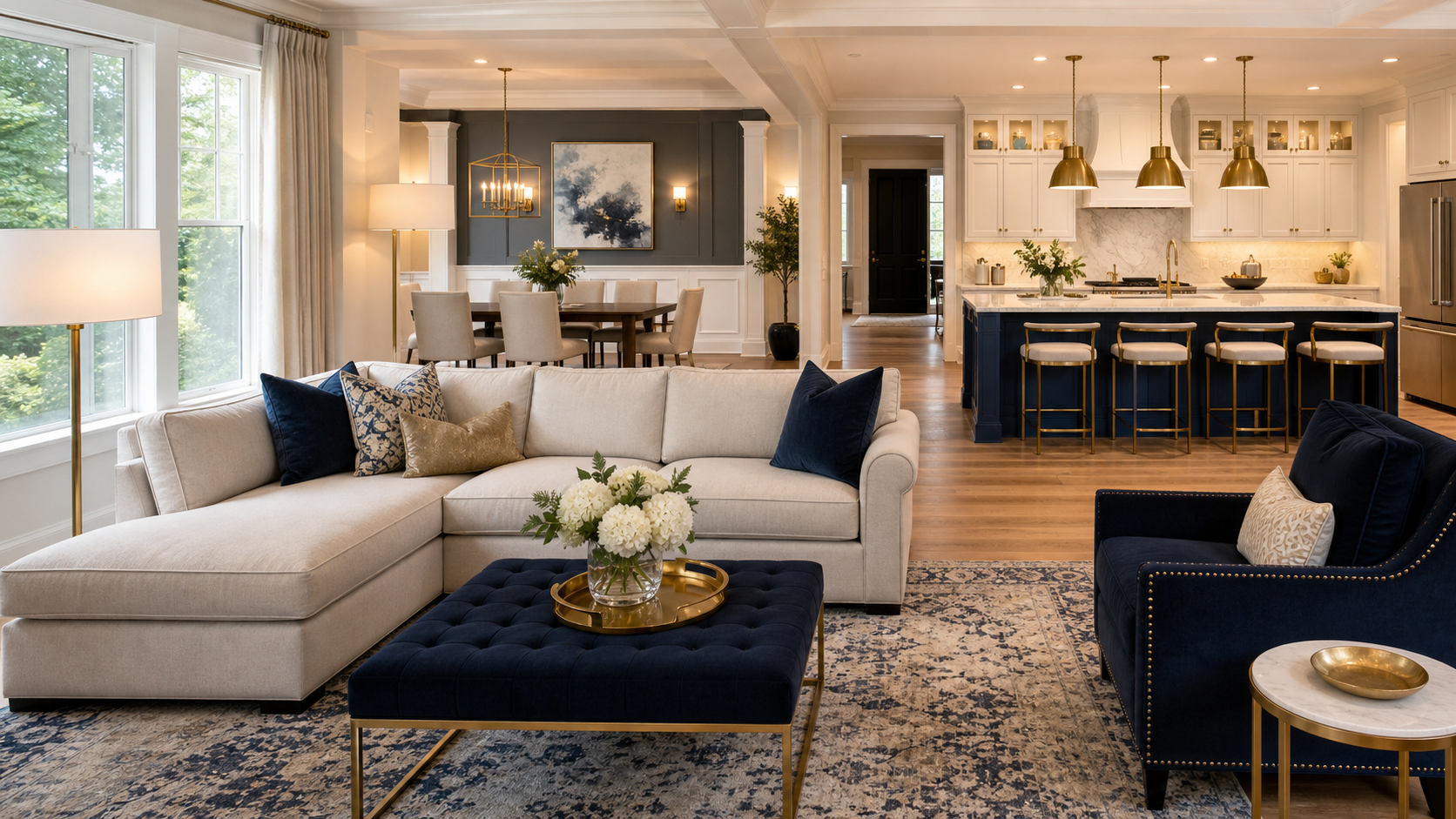
Open-concept living is everywhere in Northern Virginia new builds, and it is also where people get most stuck. Take down the walls and you gain light and flow, but you lose the cues that tell a room what it is. Done well, an open plan feels generous and connected. Done carelessly, it feels like a furniture showroom floating in a gymnasium. The difference is zoning.
How do you zone an open plan without walls?
Zone an open plan with four tools instead of walls: area rugs to anchor each function, furniture placement to draw soft boundaries (a sofa back becomes a wall), ceiling and lighting changes to mark transitions, and a consistent material palette so the zones still read as one home. Each zone gets a clear center; the whole space stays connected.
The mental shift is from walls to edges. A wall is a hard boundary; in an open plan you create soft ones. The back of a sofa defines where the living area ends. A rug under the dining table says “this is the dining room” without a single partition. A pendant cluster over the island marks the kitchen zone. None of it blocks sight lines or light, which is the whole point of going open in the first place.
Common open-concept mistakes
The biggest open-concept mistakes are pushing all the furniture against the walls (which leaves a dead middle), using rugs that are too small to anchor anything, forgetting to plan lighting per zone, and letting the kitchen, dining, and living areas clash in style. The fixes are to float furniture, size rugs up, layer lighting, and unify the palette.
Here is what goes wrong most often, and the fix:
- Furniture shoved to the perimeter. Float the seating inward so the living zone has a defined center.
- Rugs too small. A rug that only fits a coffee table anchors nothing. Go large enough to sit under the front legs of every seat.
- One ceiling light for the whole space. Each zone needs its own layered lighting, or the room reads flat and undefined.
- Three styles fighting. Kitchen, dining, and living should share materials and a palette so they belong together.
How do you keep an open plan cohesive?
Keep an open plan cohesive by repeating a limited palette and a few materials across all the zones: the same wood tone, a metal finish that recurs, and two or three colors that show up in each area. Cohesion is what lets you zone the space without it looking like three different rooms crammed together. Repetition reads as intentional.
Because you can see the kitchen, dining, and living areas all at once, they have to agree. That does not mean matching everything; it means a shared thread. Maybe the brass of the kitchen hardware reappears in the living-room lighting, and the oak of the floor is echoed in the dining table. This is the same principle that makes a whole home feel pulled-together, and it is worth reading our full guide on how to make a home look cohesive before you furnish an open plan.
How do you light an open-concept space?
Light an open plan zone by zone with layers: pendants or a fixture over the dining table, a cluster over the island, and a mix of lamps and recessed lighting in the living area. Put each zone on its own switch or dimmer so you can light the kitchen brightly while keeping the living area soft. Distinct light pools are what visually separate the zones at night.
Lighting is the most overlooked zoning tool and the hardest to fix later, because it is roughed in early. Plan it before drywall: a dedicated fixture and circuit for dining, another for the island, layered ambient and lamp lighting for the living zone. At night, those separate pools of light do as much zoning work as any rug. This is exactly the kind of decision that argues for involving a designer during framing, which ties back to when to hire a designer for new construction.
Is open concept right for you?
Open concept suits households that entertain, want light and sight lines, and like to be together across cooking, dining, and relaxing. It is less ideal if you need quiet separation, hate hearing the kitchen from the sofa, or want to hide mess from guests. The trend is softening toward “broken-plan” layouts that keep flow but add some separation.
It is worth saying plainly: open concept is not automatically better, and the design world has been quietly walking it back. Many of our clients now ask for a “broken plan,” open enough for light and connection, but with a defined study, a scullery or prep pantry off the kitchen, or a cased opening instead of a full merge. If you are building, decide this before framing. If you are working with an existing open space, smart zoning gets you most of the benefit either way.
Make your open plan feel intentional
Whether you are building or furnishing one, Shea Studio Interiors zones open-concept homes across Northern Virginia so they feel connected and calm, not cavernous.
Frequently asked questions
How do you separate spaces in an open floor plan?
Use area rugs to anchor each zone, furniture placement to form soft boundaries, distinct lighting per area, and small level or ceiling changes where they exist. These define living, dining, and kitchen zones without walls, keeping the light and sight lines that make open concept worthwhile.
What size rug should I use in an open concept living room?
Large enough that the front legs of every seating piece sit on it, which usually means an 8×10 or 9×12 in a typical open living zone. An undersized rug fails to anchor the area and makes the whole open space feel unplanned. When in doubt, size up.
How do I make an open concept space feel cozy?
Define zones, layer warm lighting with lamps and dimmers, use a large rug, and float the seating into a conversation group rather than against the walls. Texture and a tight palette help too. Coziness in an open plan comes from creating defined, well-lit centers, not from filling the space.
Is open concept going out of style?
It is softening rather than disappearing. Many homeowners now prefer a broken-plan layout that keeps light and flow but adds some separation, like a prep pantry, a defined study, or a cased opening. Fully walled-off rooms are not returning, but neither is the totally undivided great room for everyone.
Should the kitchen match the living room in an open plan?
They should coordinate, not match exactly. Because you see them together, repeat a few materials and colors across both, like a shared metal finish or wood tone, so they read as one home. Identical is unnecessary; a clear shared thread is what makes the open space feel cohesive.
or call 703-891-1570