
Interior Design Styles · Northern Virginia
What Is Modern Farmhouse Interior Design Style?
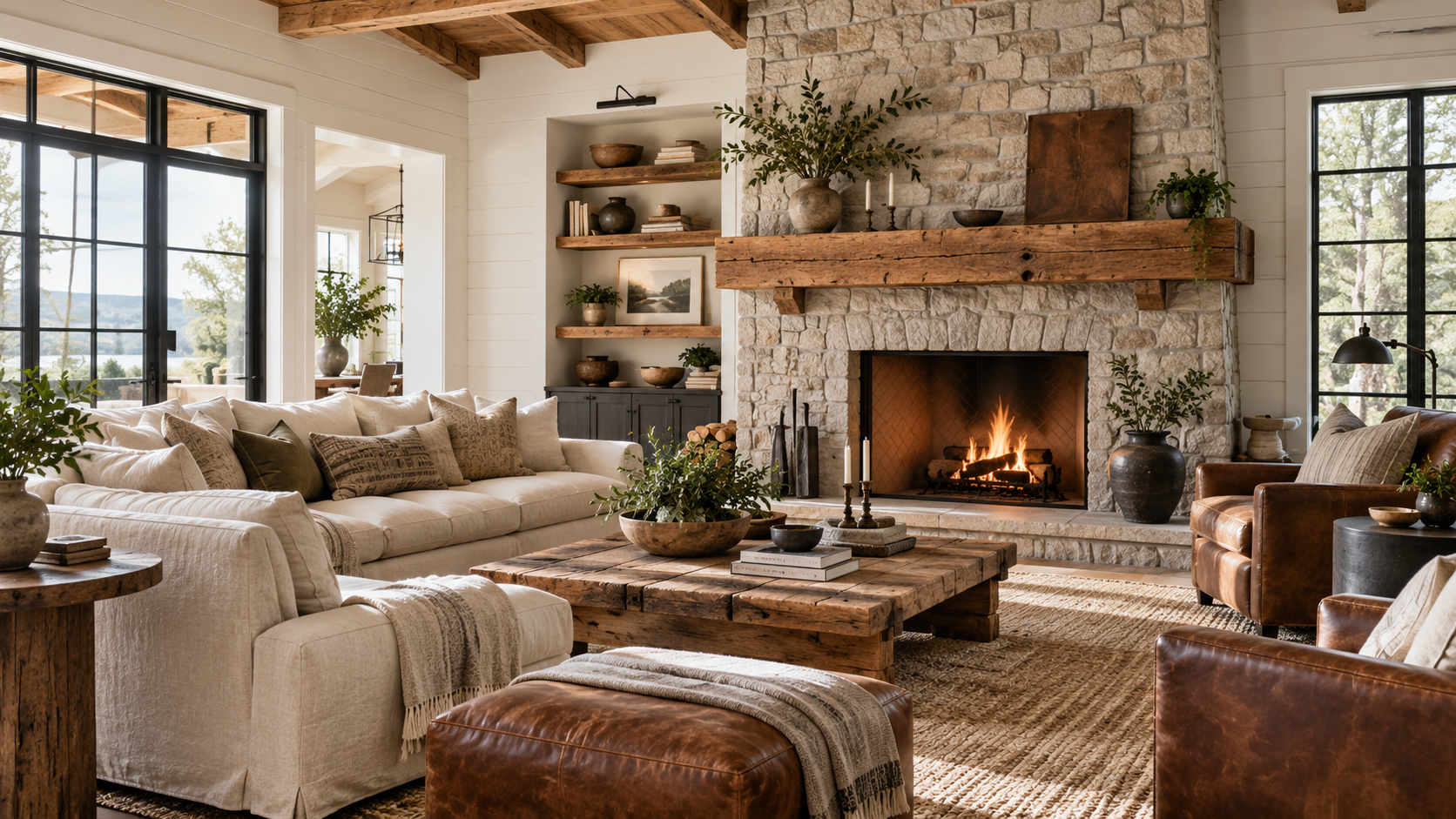
Modern farmhouse style blends the warmth and character of traditional farmhouse design with cleaner contemporary lines and a restrained palette. Shiplap, natural wood, linen, and black iron accents are the signatures. It reads as collected and lived-in without feeling busy, which is why it has remained popular well beyond its original trendiest peak.
Modern farmhouse is one of those styles that sounds simple until you’re standing in a space that got it wrong. Too much shiplap and the room starts to feel like a set. Not enough natural texture and it tilts toward cold and generic. Getting the balance right takes a clear understanding of what the style actually is, which elements carry the most visual weight, and which ones are optional.
Our team at Shea Studio Interiors has worked with many Northern Virginia homeowners who come to us wanting this look. The questions are usually the same: Is it still relevant? How do I keep it from feeling overdone? Can I blend it with what I already have? This guide answers all of those.
What Makes It “Modern”?
The style grew out of a simple idea: take the authenticity and handcrafted quality of an old American farmhouse and pair it with the cleaner lines and lighter palette of contemporary design. The word “modern” is doing real work here. It’s not a farmhouse frozen in time. It’s a farmhouse that has been edited.
Traditional farmhouse design tends to be heavier. Darker woods, carved details, layered patterns, and a sense of accumulated history over decades. Modern farmhouse strips that back. It keeps the warmth, the natural materials, and the unpretentious quality, but it removes the excess. The result is a space that feels lived-in and personal without feeling cluttered.
Think of it this way: if traditional farmhouse is a braided rug layered over wide-plank floors with a hutch full of mismatched ironstone, modern farmhouse is a flat-weave wool rug, clean plank floors, and a few well-chosen pieces on open shelving. The warmth is still there. There’s just more breathing room around it.
The Five Signature Elements
There are five elements that show up in almost every well-done modern farmhouse interior. Not every room needs all five, but a space needs at least three of them to read as genuinely modern farmhouse rather than something adjacent.
- Shiplap or board-and-batten paneling. The horizontal wood planking that began as exterior siding became the defining accent surface of this style. Used well on a single wall or fireplace surround, it adds texture without pattern. Used on all four walls, it overwhelms the room.
- Natural wood, visibly grained. Whether it’s a live-edge dining table, reclaimed wood beams, or wide-plank hardwood floors, real wood with visible grain is non-negotiable. Painted or laminate wood-look materials can support the look, but they can’t anchor it.
- Black iron or matte black metal. Pendant lights, cabinet hardware, window frames, plumbing fixtures: the graphic contrast of black metal against light surfaces is what keeps modern farmhouse from reading as soft or undefined. Commit to one metal finish across the functional pieces.
- Linen and cotton in natural tones. Slipcovers, throw pillows, roman shades, and area rugs in undyed or lightly dyed natural fibers carry the lived-in quality of the style. Patterns, when used, tend toward simple stripes, checks, or woven textures rather than florals.
- Ceramics and stoneware. A collection of matte pottery vessels, stoneware crocks, and simple earthenware on open shelving adds the collected-over-time quality that prevents a modern farmhouse room from feeling like a showroom.
The element that most consistently separates modern farmhouse done well from modern farmhouse gone wrong is restraint. One shiplap accent wall reads as considered. Four shiplap walls read as a set. Use each signature element once, purposefully, and let the others breathe.
The Modern Farmhouse Palette
Modern farmhouse palettes are quieter than people expect. The dominant tones are warm white and off-white. These backgrounds work because they let the natural materials carry the visual interest. Crisp, cool whites can feel too sterile for this look. Warmer options like Benjamin Moore White Dove or Sherwin-Williams Alabaster are closer to the mark in most kitchens and living rooms.
Beyond the primary walls, secondary tones are pulled from the materials themselves. The honey and amber tones in wood flooring, the warm greige of linen upholstery, and the pale gray-blue of weathered wood feed into the palette naturally. A soft sage green on a kitchen island or cabinetry, or a dusty navy on a single piece of furniture, can add depth without breaking the look.
What you don’t typically see in a well-done modern farmhouse space is bright saturated color. The drama comes from texture and contrast, not from color intensity. If you want the room to read as modern farmhouse rather than coastal or cottagecore, keep the palette muted and earth-connected.
Modern Farmhouse vs. Traditional Farmhouse
The distinction is worth being clear about because they’re often confused. Traditional farmhouse interiors tend to include heavier, more ornate details: turned legs on furniture, rooster motifs, distressed finishes everywhere, and a richer color palette pulled from barn reds, forest greens, and harvest golds.
Modern farmhouse is lighter and cleaner. Silhouettes are simpler. The palette is cooler and less saturated. And there’s much less pattern mixing. If traditional farmhouse is a quilted tablecloth, modern farmhouse is a linen tea towel. Both have character. They’re expressing it differently.
The metal choices also separate them clearly. Traditional farmhouse tends toward oil-rubbed bronze and antique brass. Modern farmhouse prefers matte black and brushed nickel. That shift alone changes the overall reading of a space significantly.
Where Modern Farmhouse Works Best
Kitchens are the natural home of this style. The open shelving, apron-front sinks, shaker cabinets, and subway or handmade tile backsplashes that define modern farmhouse kitchens have become iconic for good reason. They’re practical, they photograph well, and they age better than most trends. If you’re planning a kitchen renovation in Northern Virginia, this style translates well to the traditional and transitional architectural contexts common here.
Living rooms work when the shiplap and wood elements are used selectively. A fireplace surround in shiplap, a wood beam across the ceiling, and a neutral sofa in a natural weave create warmth without overdoing it. The mistake is treating every surface as a canvas for the style rather than letting some surfaces simply recede.
Bedrooms in modern farmhouse tend to be particularly peaceful. The muted palette, natural textiles, and absence of excess pattern make them genuinely restful. A wood headboard, simple iron pendant lights flanking the bed, and layered linen bedding carry the look without requiring much else.
Common Mistakes to Avoid
- Using shiplap on every surface. One accent wall or fireplace surround is a design decision. Every wall is a renovation you’ll want to undo in five years.
- Leaning on branded accessories. The word “gather” on a reclaimed wood board, matching mason jar sets, and Edison bulb string lights have become so associated with a specific moment in this style’s popularity that they now date a space. The underlying style is still current. Those particular accessories are not.
- Mixing too many metal finishes. Modern farmhouse gains its crispness partly from disciplined metal choices. Matte black throughout functional pieces, with maybe one warm accent metal, reads as intentional. Four different metals reads as indecisive.
- Using cool-toned whites. A cool stark white on walls will fight the warmth of natural wood and linen. Pull toward creamy, slightly warm whites to keep the palette cohesive.
Working with What You Have
If you’re trying to introduce modern farmhouse elements into an existing home, the good news is that the style is genuinely forgiving. It sits comfortably alongside transitional furniture and many traditional pieces. A contemporary sofa in natural linen reads as modern farmhouse. A mid-century dining chair in a warm wood tone fits naturally.
The changes that create the most immediate shift tend to be surface treatments and small decisions: paint color, a shiplap or board-and-batten accent, new hardware in matte black, and updated textiles. These can reframe a room without a full renovation.
If you’re starting from a full renovation or new build, the bigger investments, wide-plank hardwood floors, an apron sink, wood ceiling beams, do the most to establish the style at a structural level. Those are the decisions that make every other modern farmhouse choice feel grounded rather than applied.
Our team works regularly with Northern Virginia homeowners who want the warmth and character of this style but aren’t sure where to draw the line between authentic and overdone. If you’re planning a project, we’d love to talk through what modern farmhouse could look like in your specific home. See our full-service interior design and portfolio to get a sense of how we approach this.
Common Questions About Modern Farmhouse Style
Is modern farmhouse style still in style?
Yes, though some of its accessories have dated. The underlying style, natural materials, restrained palette, shiplap accents, and matte black metal hardware, remains current. What’s shifted is which specific accessories feel fresh. Mason jar collections and word art feel dated. Genuine reclaimed wood, quality linen, and handmade ceramics continue to read as timeless.
What’s the difference between farmhouse and modern farmhouse design?
Traditional farmhouse is heavier and more ornate: darker woods, turned-leg furniture, richer colors like barn red and harvest gold, and oil-rubbed bronze metals. Modern farmhouse is lighter and cleaner. It keeps the warmth and authenticity but removes the ornate detail. The palette is cooler and more restrained, silhouettes are simpler, and matte black replaces bronze as the primary metal.
What colors are used in modern farmhouse design?
The dominant tones are warm whites and off-whites for walls and backgrounds, natural wood tones in flooring and furniture, and muted earth tones like warm greige and soft sage for accents. Black metal accents provide graphic contrast. The palette is intentionally low-saturation. Bright or vivid colors break the look. Warmth comes from texture and material rather than color intensity.
What materials define modern farmhouse style?
Shiplap and board-and-batten wood paneling, wide-plank hardwood flooring, reclaimed or live-edge wood furniture, linen and cotton textiles, ceramic and stoneware pottery, and matte black hardware and fixtures. Natural stone, especially honed limestone or soapstone in kitchens, also reads well in this style. The common thread is that materials should feel genuinely natural rather than synthetic.
Can modern farmhouse style work in a Northern Virginia suburban home?
Yes, very well. Most Northern Virginia homes are in traditional or transitional architectural styles, and modern farmhouse translates naturally into those frameworks. The key is working with your home’s specific proportions and not forcing elements that don’t fit the scale. Our team has helped many Fairfax County and Northern Virginia homeowners adapt this style to their specific conditions.
How do you keep a modern farmhouse space from looking dated?
Focus on quality materials rather than trending accessories. Wide-plank hardwood floors, natural textiles, genuine wood furniture, and quality hardware will outlast trends. Avoid overly branded accessories and don’t overuse any single signature element. Restraint is the defining quality of modern farmhouse done well. A space with three well-chosen signature elements reads as more sophisticated than one where every surface has been treated.
Ready to Bring Modern Farmhouse to Your Home?
Our team works with Northern Virginia homeowners to design spaces that feel genuinely warm and personal, not like a Pinterest board come to life. Let’s talk about what modern farmhouse could look like in your specific home.
Or call us at 703-891-1570 • [email protected]
Written by Shea Studio Interiors, Inc.
Our design guidance draws on 30-plus years of hands-on residential experience in Northern Virginia and Metro DC. Founder June Shea is a 2023 Virginia Top Designer, Best of Houzz winner, and NKBA member whose work has been featured in the Washington Post and USA Today.
Questions about your space? Reach out to our team.