
Bathroom design · Northern Virginia
How to Choose Bathroom Tile: A Room-by-Room Guide
Choose bathroom tile by starting with function, not aesthetics: floor tiles need a coefficient of friction (COF) of 0.6 or higher in wet areas, wall tiles can prioritize look. Then match scale to the room size, coordinate grout color to your maintenance tolerance, and let the largest surface set the visual tone before adding accent or pattern tiles.
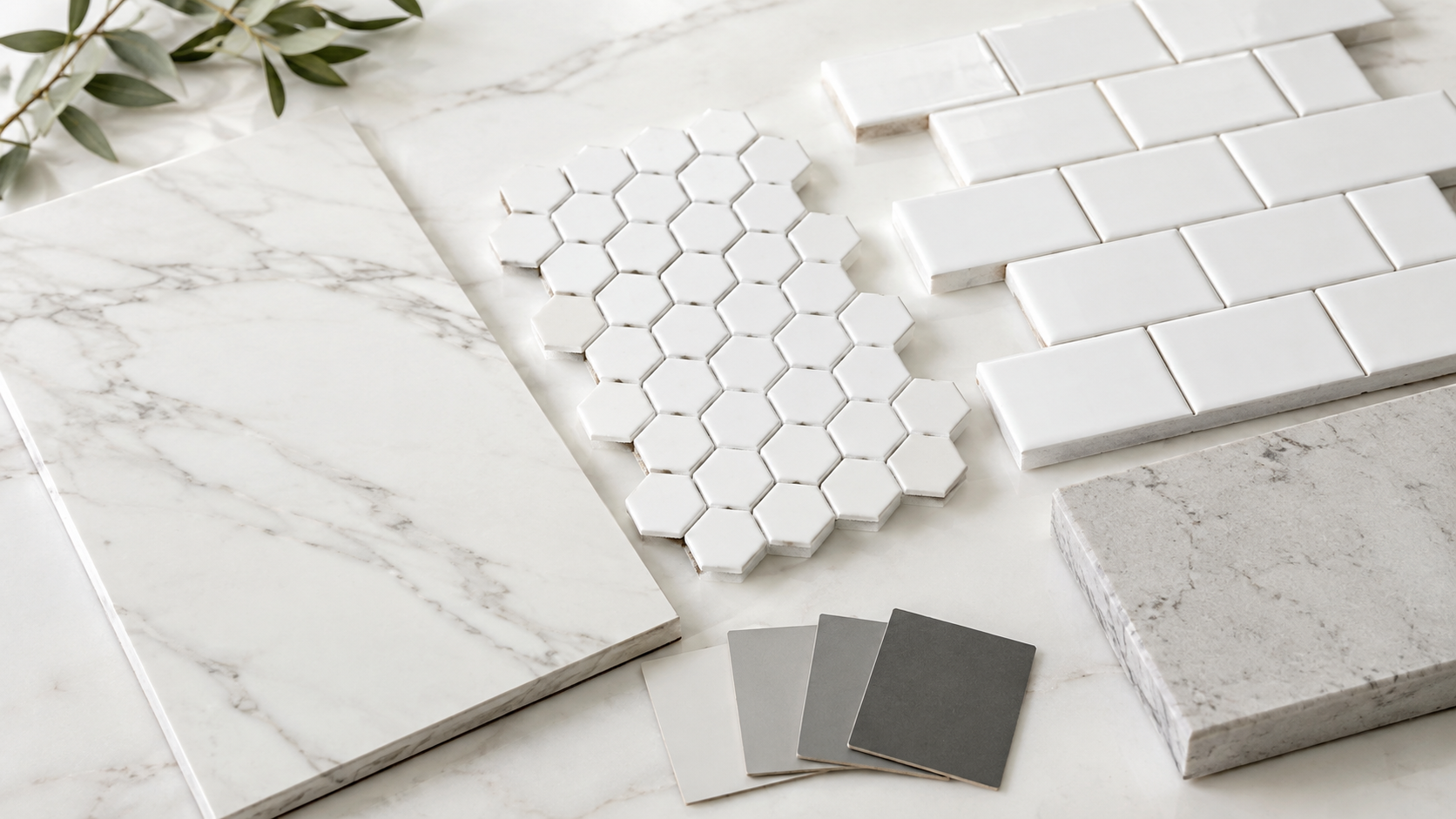
Floor tile vs. wall tile: the rules are different
Floor tile must meet a minimum COF (coefficient of friction) of 0.6 for wet areas. Wall tile carries no slip rating requirement and can be any material that bonds to the substrate. Using a polished marble on the floor that is specified for walls risks a fall; using a rough-surfaced floor tile on the shower wall creates a maintenance problem.
The COF rating lives on the tile’s specification sheet, not on the showroom display card. Always ask for it before purchasing floor tile. Honed finishes and matte glazes generally achieve acceptable wet ratings; polished surfaces almost never do. Textured tiles pass easily but can trap soap scum, so verify before committing to a large area.
For shower floors specifically, smaller tile formats create more grout joints, which add grip texture without needing a rough surface. A 2-inch hex mosaic or a 3-by-3-inch stone cube gives adequate traction across the wet pan. Large-format floor tile (24-by-24 or larger) can also pass the COF threshold in a honed or textured finish, but requires a perfectly flat substrate to avoid lippage.
Porcelain vs. ceramic: which one is right for your bathroom?
Porcelain is denser, less porous, and harder than ceramic, making it better suited to bathroom floors, shower surrounds, and high-humidity environments. Ceramic is lighter, easier to cut, and works well on bathroom walls and backsplashes where moisture exposure is lower. Both fire in a kiln; the difference is the clay body composition and firing temperature.
Porcelain’s water absorption rate is under 0.5 percent per ASTM C373 standards. Ceramic typically runs 3 to 7 percent. In a shower that runs daily, that difference adds up. Porcelain also accepts large-format manufacturing more reliably, which is why 24-by-48 and 48-by-48 slabs are almost always porcelain rather than ceramic.
For a powder room or a bathroom wall tile above the splash zone, the performance gap between porcelain and ceramic closes considerably. Ceramic remains the material behind most classic subway tile installations because it is lighter, cuts cleanly, and costs 20 to 40 percent less than comparable porcelain. Choose porcelain for floors and showers; ceramic is a legitimate option for walls and decorative accents.
Tile size and how it changes a room
Large-format tiles (12-by-24 or bigger) make a small bathroom feel larger by reducing grout joint lines. Small tiles (2-inch hex, 1-by-2 brick mosaic) add texture and pattern interest. The right choice depends on the room’s square footage, the ceiling height, and how much visual pattern you want to introduce without overwhelming the space.
A 5-by-8-foot bathroom with a standard 8-foot ceiling tends to read best with a floor tile in the 12-by-24 range, laid in a brick offset. The longer dimension pulls the eye along the room’s longest axis, which creates a sense of more floor area. A 2-by-4-inch subway tile on the walls adds scale contrast without competing with the floor.
In a generous master bath with a 10-foot ceiling, large-format slabs can be carried from floor to wall without the room feeling overdone. 24-by-48 porcelain panels book-matched at the seam read like stone and reduce visual noise. The key is that grout joint minimization works in concert with the slab’s veining or texture, not instead of it.
Very small tiles in a large bathroom can look busy and undersized. The proportional rule of thumb: your largest tile format should be no larger than one-third the length of the shortest wall dimension. A tile larger than that ratio can look like it is fighting the architecture rather than supporting it.
Natural stone vs. porcelain: honest maintenance comparison
| Factor | Natural stone (marble, travertine, limestone) | Porcelain tile |
|---|---|---|
| Sealing requirement | Yes: annually for marble, every 2 to 3 years for travertine | None: glazed surface is non-porous |
| Etching risk | High: acidic products (soap, shampoo, citrus cleaners) etch polished surfaces | None: glazed porcelain does not etch |
| Staining risk | Moderate to high without sealing; oil and dye penetrate the stone body | Low: stains stay on the glaze surface and clean easily |
| Visual character | Natural variation, unique veining, genuine luxury presence | Consistent; some large-format panels mimic stone closely |
| Cost per square foot installed | $18 to $45+ depending on stone and origin | $8 to $22 for quality mid-range |
| Best application | Feature walls, floors in low-splash areas, powder rooms | Showers, wet floors, full bathroom coverage |
Grout color: the decision most people get wrong
Matching the grout to the tile color minimizes the visual grid and makes the tile surface read as a single continuous plane. Contrasting grout draws the grid forward as a design element. White grout shows staining quickly; mid-tone grays and taupes hide it. Epoxy grout is stain-resistant and worth the extra cost for shower floors.
The grid effect of a tile installation is determined more by grout visibility than tile size. A classic white subway tile with bright white grout disappears into the wall as a clean, seamless surface. The same tile with charcoal grout reads as a graphic grid pattern. Neither is wrong, but they create fundamentally different rooms and the grout decision needs to happen before the tile is ordered, not at the installation stage.
Epoxy grout costs roughly three times as much as sanded or unsanded cement grout and requires a more careful installation because it sets quickly. On shower floors where soap and moisture accumulate daily, that upfront cost is recovered in reduced cleaning and no resealing requirement over the life of the installation. For shower walls and dry areas, standard cement grout with a penetrating sealer applied at installation is a reasonable and lower-cost alternative.
How to build a tile scheme with multiple surfaces
In a full bathroom renovation, anchor the design with one primary tile for the largest surface, then choose an accent or feature tile that shares at least one element with the primary: a tone, a texture, or a veining direction. Introduce a third tile only if it bridges the first two visually, not as an independent choice.
The primary tile typically lives on the shower wall or the floor, wherever the eye lands first on entry. It sets the palette’s temperature: cool stone with blue-gray veining sets a spa register; warm travertine or honey-toned porcelain reads more rustic and organic. Every other selection follows that temperature.
Accent tiles work best at human-scale focal points: a niche interior, a wainscot cap, or a single feature wall behind a freestanding tub. An accent tile applied to an entire wall often competes with the primary rather than complementing it. Keep accents to moments, not fields.
Hardware metal and tile finish temperature should agree. Warm brushed brass hardware reads well against cream, warm gray, or soft beige tile. Brushed nickel and chrome pair with cooler blue-gray and white palettes. Mixing warm and cool within a single bathroom is possible but takes skill to prevent the result from reading as unresolved. See our full bathroom renovation process guide for how these decisions sequence through the design phases.
Need help choosing the right tile?
Shea Studio Interiors has led Northern Virginia and Metro DC bathroom renovations for more than 30 years. We source tile through professional accounts that price below retail and select materials in sequence so every surface reads as a unified composition.
Frequently asked questions
What COF rating is safe for a wet bathroom floor?
The Americans with Disabilities Act (ADA) recommends a COF of 0.6 or higher for wet floors. The TCNA (Tile Council of North America) uses the same threshold. For shower floors, a slightly rougher texture or smaller tile format that adds grout joint texture often achieves COF above 0.8. Always ask for the specification sheet before purchasing floor tile.
Is marble a bad choice for a bathroom?
Marble is not a bad choice, but it requires informed maintenance: annual sealing, pH-neutral cleaners only, and acceptance that polished surfaces will develop patina over time. In high-use family bathrooms it demands discipline. In a primary bath used primarily by adults with a consistent cleaning routine, marble performs beautifully for decades. It is a material choice with maintenance trade-offs, not a mistake.
How many different tiles should I use in one bathroom?
Most well-designed bathrooms use two to three tile selections: a primary field tile, a floor tile (which can match the wall or contrast), and an optional accent or mosaic. More than three distinct tiles typically produces a busy result unless the selections share a tight palette and the designer is intentionally layering pattern. When in doubt, two tile choices executed beautifully outperform four tiles chosen without a unifying logic.
Should the floor tile match the shower tile?
Matching the floor tile and shower floor creates a continuous reading that visually expands the room. Using a different shower floor tile is common and can define the wet zone as a distinct element. The most important rule is that both choices should relate through color temperature and finish: a warm-toned floor and a cool-toned shower surround will feel unresolved unless a transitional element bridges them.
Can I tile a bathroom myself?
Wall tile installation is within reach for a patient DIYer with proper substrate preparation and a tile saw. Shower installations require waterproofing membrane work (Schluter Kerdi or similar) that must be done correctly before any tile goes up. Floor tile over concrete is manageable; floor tile over wood subfloor requires checking deflection limits and often adding a decoupling membrane. Mistakes in waterproofing cost far more than the labor savings.
What tile makes a small bathroom look bigger?
Large-format tiles with minimal grout joints reduce the visual grid, which makes the floor plane read as larger. Carrying the same tile from floor up the wall removes the horizontal visual break that chops a room vertically. Light and cool tones recede, adding depth. Installing floor tile on the diagonal adds visual interest and can also make the space feel wider.