
Bathroom design · Northern Virginia
Is a Curbless Walk-In Shower Worth It? (Pros, Cons, and Regrets)
A curbless walk-in shower is worth it for most renovations: it looks open and luxurious, is easier to clean, and is the most accessible, aging-in-place option. The trade-offs are higher cost, the need for precise floor sloping and waterproofing, and managing water containment, all of which require an experienced installer to get right.
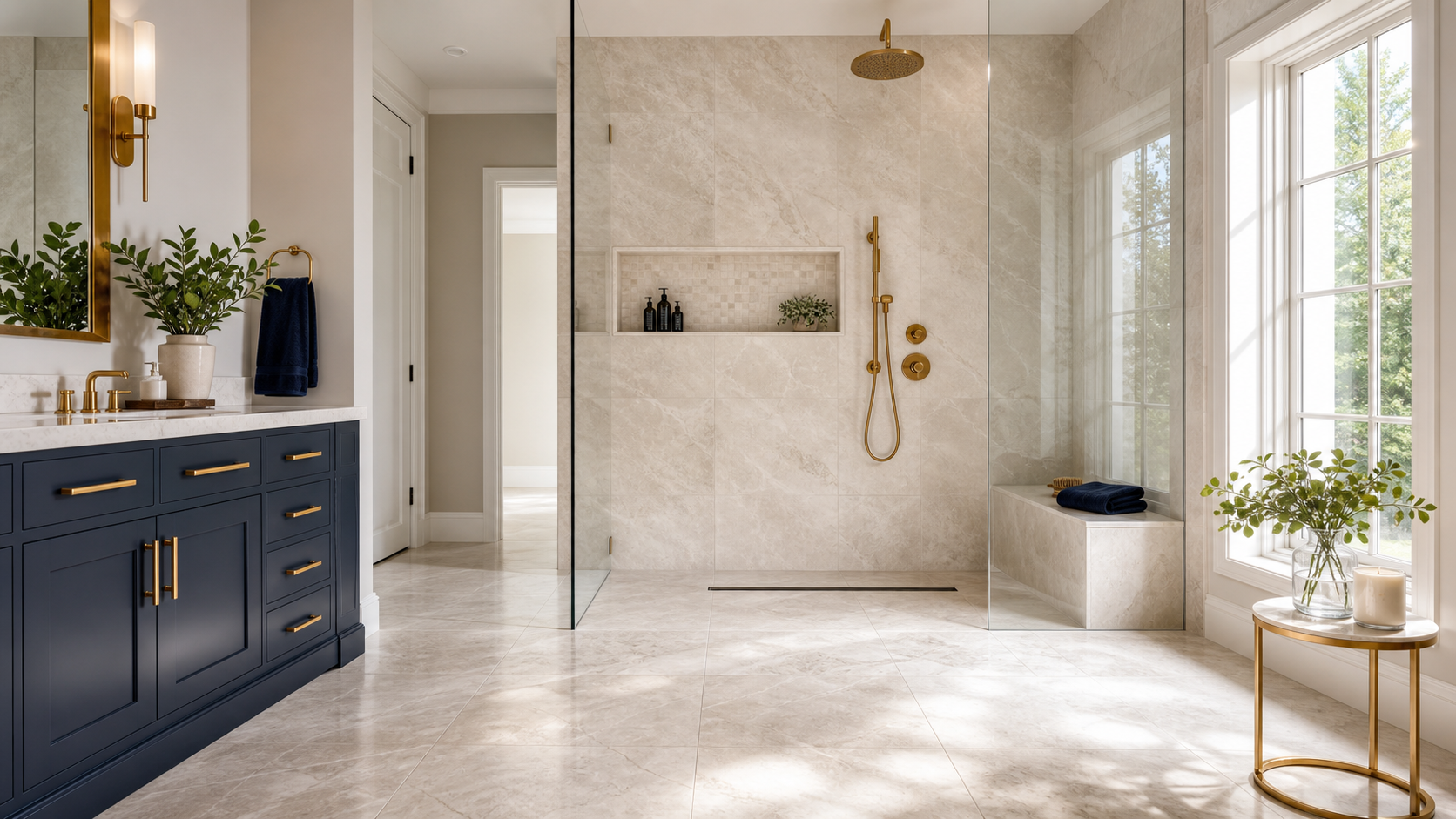
Curbless showers, sometimes called zero-threshold or wet-room showers, are one of the most requested features in bathroom renovations right now, and also one of the most second-guessed. The look is undeniable. The worry is water on the bathroom floor. Both are legitimate, and the outcome comes down almost entirely to how it is built.
What is a curbless shower, and is it worth it?
A curbless shower has no raised threshold; the shower floor is flush with the bathroom floor, with a slope and drain managing the water. It is worth it for the open, luxurious look, easy cleaning, and accessibility. The catch is that it must be built with a correct slope and full waterproofing, so it relies more on installer skill than a standard shower does.
The appeal is both aesthetic and practical. Visually, removing the curb makes a bathroom feel larger and more spa-like, with an uninterrupted run of floor tile. Practically, there is no curb to step over (a real benefit as people age) and no curb lip to scrub. The reason people hesitate is the same reason it has to be done well: with no curb holding water in, the floor slope and waterproofing are doing all the work.
The pros of going curbless
Curbless showers make a bathroom look bigger and more luxurious, are easier to clean with no curb to scrub, improve accessibility for all ages and mobility levels, and let you run one continuous tile floor for a seamless, high-end look. They are also the most future-proof choice if you plan to age in your home.
- Open, larger feel. No visual break across the floor makes even a modest bathroom feel more generous.
- Accessibility. Zero threshold works for strollers, walkers, and wheelchairs, and for aging in place.
- Easier cleaning. No curb crevice to scrub, and continuous tile is simpler to wipe down.
- Resale and longevity. A spa-like primary bath shows beautifully and suits buyers planning to stay.
The cons and common regrets
The downsides: curbless costs more because the subfloor often must be recessed or built up to create slope, it demands flawless waterproofing and an experienced installer, and water can travel onto the bathroom floor if the slope, drain, or glass is wrong. Regrets almost always trace to a poor install, not the concept itself.
Here is the honest part. The people who regret a curbless shower are usually the ones whose installer did not get the slope right or skimped on waterproofing, and now they have water creeping toward the vanity. The concept is sound; the execution is unforgiving. It also tends to cost more than a standard curbed shower because creating that flush slope often means recessing the subfloor or building the bathroom floor up. Done by someone who knows what they are doing, none of these are problems. Done cheaply, all of them are.
Does it add value or help aging in place?
Yes to both. A well-built curbless shower reads as a premium, modern feature that helps a primary bath show well, and it is the gold standard for aging in place because there is no threshold to step over. For homeowners planning to stay in their Northern Virginia home long term, it is one of the smartest accessibility investments that does not look clinical.
This is where curbless quietly wins over a standard shower. Most accessibility features look like accessibility features. A curbless shower is fully barrier-free and looks like luxury, not a grab-bar retrofit. For the many NoVA homeowners renovating a forever home, that combination of beauty and future-proofing is exactly why we recommend it so often. Pair it with a comfortable bench and a handheld on a slide bar and it serves every stage of life.
How to do it right
Get it right with four things: a correct floor slope toward the drain (often a linear drain along one wall for clean modern looks), a fully waterproofed pan and walls, enough glass or a generous wet zone to keep spray contained, and an experienced tile and waterproofing installer. Specify these up front; they are not where you economize.
A few specifics we insist on: a linear drain set against a wall lets the floor slope in a single direction, which both looks cleaner and is easier to tile with large-format stone. The waterproofing membrane has to be continuous and properly lapped, with no shortcuts behind the tile. And the shower opening needs enough glass, or a deep enough wet zone, that spray does not reach the rest of the bathroom. These are exactly the decisions a designer locks in early, which connects to getting the whole bathroom renovation order right.
Want a curbless shower done right?
The look is easy; the build is not. Shea Studio Interiors designs and specifies curbless and spa baths across Northern Virginia so the waterproofing and slope are right the first time.
Frequently asked questions
Do curbless showers leak onto the bathroom floor?
Not when built correctly. A proper floor slope toward the drain, full waterproofing, and enough glass or wet-zone depth keep water contained. Leaks and water travel come from poor installation, not the curbless concept. This is why an experienced waterproofing and tile installer is essential.
Is a curbless shower more expensive?
Usually yes, because creating a flush, sloped floor often requires recessing or building up the subfloor and meticulous waterproofing. The premium is mostly in labor and the structural work to get the slope right. For most renovations the look, accessibility, and longevity justify the added cost.
Are curbless showers good for aging in place?
They are the best option. With no threshold to step over, a curbless shower is fully barrier-free for walkers and wheelchairs, yet it looks like a luxury feature rather than a medical one. For homeowners planning to stay in their home long term, it is one of the smartest accessibility investments.
Do you need a glass door on a curbless shower?
You need enough glass or a deep enough wet zone to contain spray, but not always a full door. Many curbless designs use a fixed glass panel and a generous opening. The right amount depends on the layout and showerhead placement, which a designer plans so water stays in the shower.
What drain is best for a curbless shower?
A linear drain set along one wall is the popular modern choice, because it lets the floor slope in a single direction and works beautifully with large-format tile. A traditional center point drain also works but requires the floor to slope from four directions, which is harder to tile cleanly.
or call 703-891-1570