
Design principles · Northern Virginia
What Is Timeless Design, and Where Should You Splurge vs Save on Finishes?
Timeless design avoids combinations that read as “of a moment” in favor of proportions, materials, and palettes that age well. The rule for spending is: splurge on the things you can’t easily change (cabinetry, stone, tile, hardware, architectural lighting). Save on soft goods, accessories, and anything meant to be replaced as taste evolves.
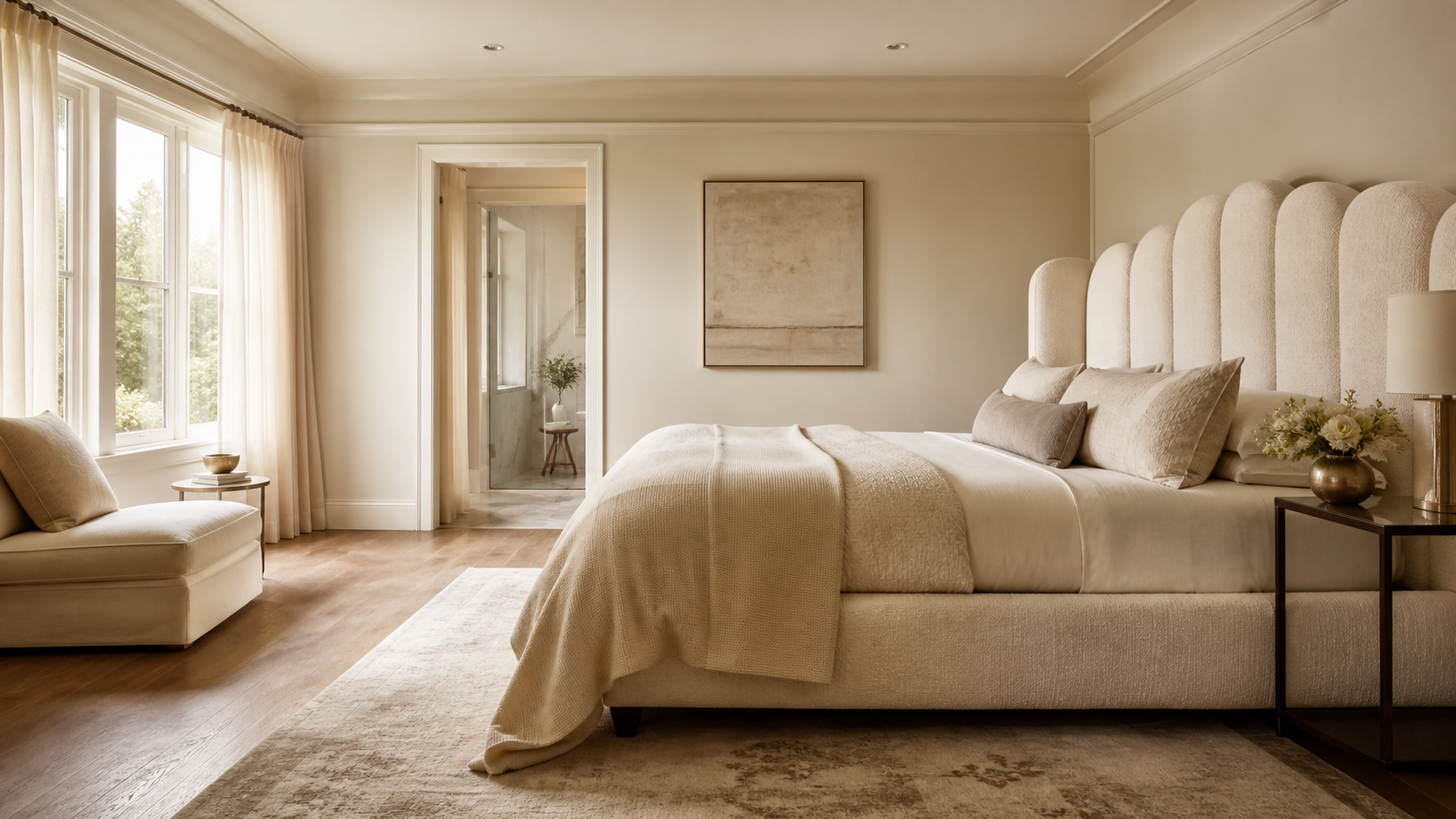
Timeless is one of the most overused words in interior design, and one of the most misunderstood. It doesn’t mean white or beige or safe. It doesn’t mean no personality. What it means is that the decisions you make today won’t embarrass you in ten years — not because they’re dull, but because they’re built on proportion, quality, and combinations that have worked for a long time and will keep working.
The splurge-versus-save question is really a question about permanence. Some finishes are hard to change after installation. Others can be updated relatively easily. Good design thinking distributes the budget accordingly.
What makes a design feel timeless?
Timeless design shares a few consistent traits: good proportions, materials that wear well and develop character, combinations that don’t rely on a single trend to hold together, and restraint in the number of competing focal points. It avoids what a designer thirty years from now would immediately recognize as belonging to one specific moment.
Proportion matters more than almost any other factor. A kitchen island at the right height, the right length, and the right distance from the counters reads as correct regardless of decade. The same island, slightly too wide for the footprint or topped with a material that was everywhere for eighteen months and then wasn’t, will feel dated.
Materials that develop character over time, rather than materials that look perfect when new and tired two years later, tend to hold up. Unlacquered brass gets a patina. Honed stone develops a soft warmth. Good hardwood floors take on depth. These materials are the opposite of the fast-fashion version of interior design, which looks great on launch day and ordinary two seasons later.
Where to splurge: the things that are expensive to change
Spend well on cabinetry, stone countertops, tile, hardware, and architectural lighting. These are decisions that are embedded in the building. Changing them means tearing things out, which costs significantly more than the original upgrade would have. A slightly better cabinet door profile, a stone counter that will last for decades, or a light fixture that doesn’t look like a specific year: these are the investments that make sense.
Cabinetry is one of the clearest examples. The cabinet box is almost always commodity construction. The door profile and the finish are where quality and longevity diverge. A shaker door in a painted finish that reads as classic will look right for the next twenty years. A highly ornate door or a deeply grooved slab finish that was in every showroom during a specific two-year window will announce its vintage.
Tile is another place to invest in quality and restrain the trend-chasing. Subway tile is not exciting, but it’s not going anywhere. Large-format neutral stone tile works in almost any decade. The intricate geometric patterns that cycle in and out of design editorials are beautiful in the moment and harder to live with as taste shifts. The tile is going to outlive the trend that inspired it.
Hardware is relatively small in cost relative to its visual impact. Good solid brass, unlacquered or in a satin finish, reads as quality in almost any context. Hardware that looks like it came in a blister pack from a big-box store announces that no one thought about it carefully. The upgrade here is usually not significant financially and almost always worth it.
Where to save: the things that can change
Paint, soft furnishings, accessories, window treatments, and accent pillows can all be updated without a renovation. These are where you can follow your current taste more freely. The sofa you fall in love with today doesn’t need to be the sofa you have in twelve years. The accent pillow can change with the season. Spending more here doesn’t automatically mean better longevity.
Paint is the most forgiving finish in a home. A color you love now that reads as “very 2026” in five years costs less than almost anything else to change. That’s not a reason to be timid with paint. It’s a reason to be willing to commit to a color you actually love, knowing it isn’t permanent in the same way tile is.
Furniture is a middle category. A well-made sofa with a classic silhouette in a quality fabric can last decades and look right as tastes shift. A trend-forward silhouette in a novelty material may look dated in a few years and can’t be updated without replacement. The better spend on furniture is the classic form in quality material, not the most-photographed sofa of the current moment.
Accessories and art are where personality lives. This is the right place to take risks, follow the current moment, and let your taste be specific. A bronze sculpture or a meaningful painting doesn’t need to be timeless in the same way a tile floor does. The art should be authentic to you, and it can change as you do.
| Category | Splurge or save? | Why |
|---|---|---|
| Cabinetry profile and finish | Splurge | Expensive to change; carries the kitchen or bath for 15+ years |
| Stone countertop | Splurge | Durable, improves with age, hard to replace |
| Tile (floor and field) | Splurge on quality, restrain on trend | Permanent; classic choices outlast trend choices |
| Hardware | Splurge (modest cost, high impact) | Signals quality; upgrading cost is low relative to effect |
| Architectural lighting | Splurge on placement, moderate on fixture | Placement is permanent; fixtures can be replaced |
| Paint | Save or spend freely | Easiest finish to change; follow your taste |
| Soft furnishings | Save on trend, splurge on quality fabric | Classic silhouettes in good fabric outlast trend silhouettes |
| Accessories and art | Your call | The right place for personality and current taste |
Building something meant to last?
Shea Studio Interiors has been making these finish decisions across Northern Virginia and Metro DC for 30+ years. We know which investments hold up and which ones don’t. Let’s talk about your project.
Frequently asked questions
Is timeless design just the same as boring design?
Not at all. Timeless design can be bold, specific, and deeply personal. The test isn’t whether it has personality: it’s whether that personality is built on proportion and quality or built on what happened to be everywhere at one particular moment. A deep navy kitchen with unlacquered brass hardware is specific and bold. It’s also grounded in a classic material relationship that doesn’t depend on a trend cycle to hold up.
How do you know if something is trending vs timeless?
One useful test: does this combination appear across a wide range of design eras and contexts, or did it appear everywhere starting about two years ago? Classic Carrara marble, simple Shaker cabinetry, and solid brass hardware have appeared in well-regarded residential design for most of the last century. The fluted-everything-painted-in-terracotta look has appeared in every design publication since 2022. One of those is more likely to be around in fifteen years.
What finishes tend to date the fastest?
Highly specific surface treatments that were briefly everywhere: certain metallic paints, very specific tile patterns that moved from editorial to builder-grade in under three years, novelty cabinet door profiles with deeply cut geometry, and anything that had a specific marketing moment and then saturated the mid-range market. Dated finishes tend to be those that peaked quickly and didn’t have a long precedent before their moment.
Should I avoid trends entirely when renovating?
Not necessarily. The question is where the trend lands in your project. Using a trending color as a paint choice or in a pillow: low risk, easy to update. Building a trending finish into your tile floor or cabinet door: higher risk, hard to change. A useful principle: let your permanent decisions be classic, and let your replaceable decisions reflect your current taste.
Can a room be both personal and timeless?
Yes, and that’s usually the goal. Timeless design isn’t impersonal. It’s the careful selection of permanent elements that have staying power, combined with the freedom to layer in personality through the softer, more changeable pieces. The architecture and the built-ins are the long-term commitment. The art and the textiles are where the room becomes yours specifically.
What’s the best way to evaluate a finish for longevity before committing?
Ask how long it’s been in production and who has used it. A stone type, a cabinet finish, or a tile that has been specified by serious designers across multiple decades has proven itself. A material that appeared at trade shows in the last eighteen months and has been everywhere in design media since hasn’t been tested by time. That doesn’t mean it’s wrong. It means the jury is still out.
or call 703-891-1570