
Design principles · Northern Virginia
What Actually Makes a Home Look Expensive (It’s Not the Budget)
A home looks expensive when it has cohesion, scale, and restraint: a tight palette, well-proportioned furniture, layered lighting, quality window treatments hung high and wide, fewer but better pieces, and crisp details like trim and hardware. These read as expensive far more than price tags do, and most are about smart choices, not big spending.
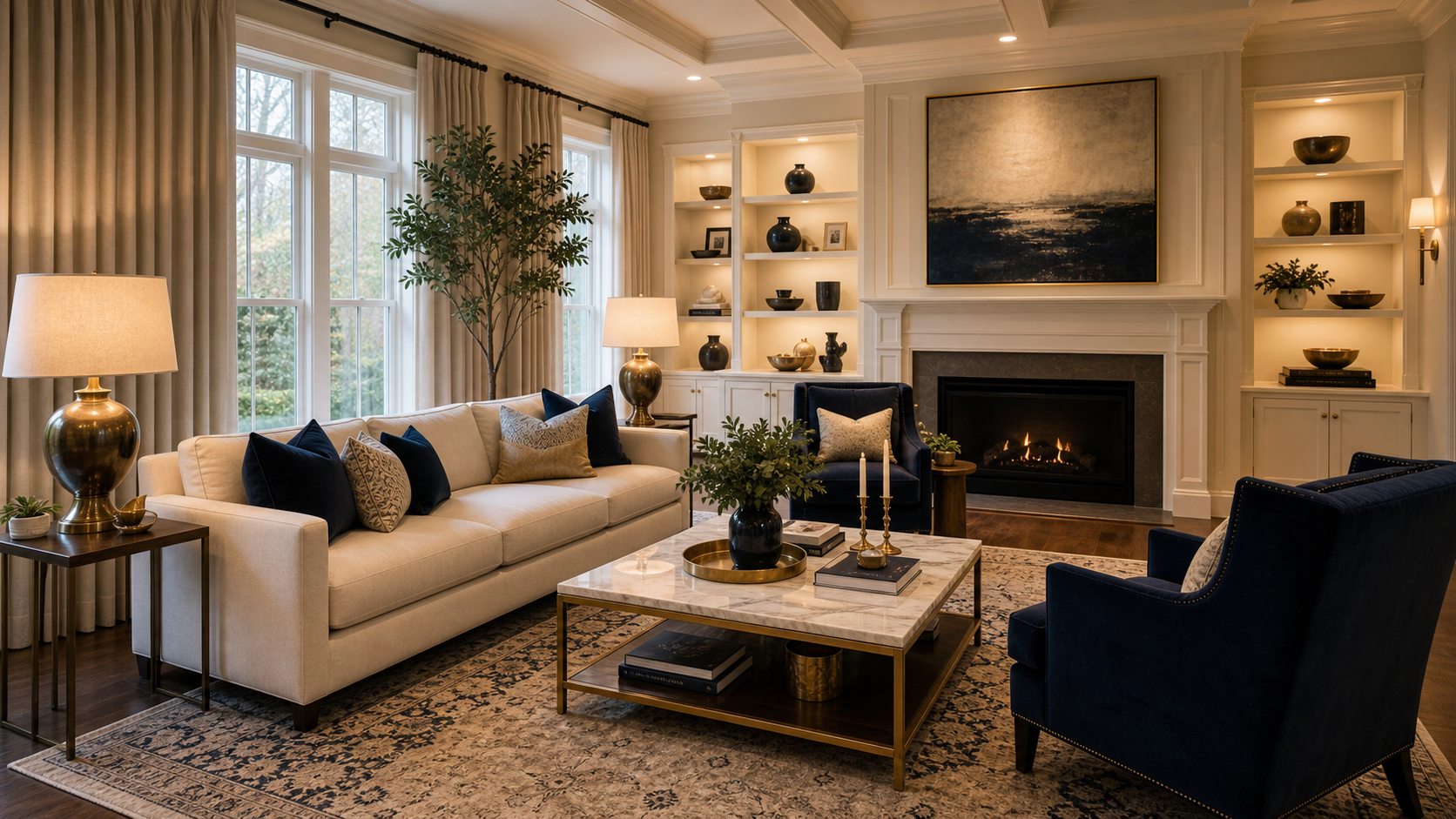
Here is the secret the luxury magazines bury: most of what makes a room look expensive has nothing to do with how much it cost. We have seen modest budgets photograph like a million dollars and lavish ones look cluttered and cheap. The difference is a short list of design moves anyone can apply. None of them are “spend more.”
What makes a home look expensive (not money)?
A home reads expensive through cohesion (a tight, consistent palette), correct scale (furniture and art sized to the room), layered lighting instead of a single overhead, generous window treatments, and restraint, fewer, better pieces with space around them. These signals communicate quality and intention, which the eye registers as expensive regardless of actual cost.
The through-line is intention. An expensive-looking room feels decided, not accumulated. Every choice supports the others, nothing is fighting, and there is breathing room. A cheap-looking room is usually the opposite: a clash of styles, undersized everything, one harsh ceiling light, and too much stuff. Fix the intention and the price tag becomes almost irrelevant. The biggest single lever is cohesion, which is why this pairs so closely with making your whole home look cohesive.
The biggest tell: scale and proportion
Scale is the number-one giveaway. Expensive rooms use furniture, art, and rugs sized correctly to the space: a sofa that fills its wall, art hung large, and a rug big enough that the front legs of the seating sit on it. Undersized everything, the most common mistake, instantly reads as cheap and unconsidered no matter the quality of the pieces.
Watch for these proportion fixes, which cost nothing but attention:
- Rug size up. The rug should reach under the front legs of all the seating, not float like a postage stamp.
- Art bigger. One large piece or a generous grouping beats a small frame stranded on a big wall.
- Furniture to the room. A sofa should relate to its wall; a tiny loveseat in a large room looks lost.
- Lift the eye. Tall elements, drapery and bookcases near the ceiling, make a room feel grander.
This is the same scale principle that trips people up with rugs and sofas in every layout question, and getting it right is the cheapest upgrade in design.
Layered lighting (lose the single overhead)
Nothing makes a room look cheaper than one bright ceiling light. Expensive rooms layer light: ambient (overall), task (reading, cooking), and accent (lamps, sconces, picture lights), all on dimmers. Three to five light sources per room at varying heights create depth and warmth. The single overhead flattens a space; layers give it the glow that reads as luxury.
If you change one thing tonight, add lamps and put everything on dimmers. A builder-grade room lit by a single can-light array looks like an office. The same room with a couple of table lamps, a floor lamp, and dimmed overheads looks like a hotel suite. Designers think in three to five sources per room at different heights, and they almost never run the overhead at full blast. This is also one of the most-regretted misses in kitchen design, for the same reason.
Window treatments: hang high and wide
Window treatments are a major expensive-or-cheap tell. Hang drapery rods near the ceiling and extend them several inches past each side of the window, with panels long enough to just kiss the floor. This makes windows look larger and ceilings taller. Skimpy panels hung at the window frame, or too short, are one of the fastest ways a room reads cheap.
The rule is “high and wide.” Mount the rod close to the ceiling, not at the top of the window, and run it wide enough that the open panels frame the glass rather than covering it. Panels should break at the floor, never hover above it like high-water pants. Even simple, affordable drapery looks custom when it is hung correctly, and gorgeous drapery looks cheap when it is hung wrong. Proportion beats price here, every time.
Restraint, quality, and crisp details
Expensive rooms show restraint: fewer, better pieces with negative space around them, rather than every surface filled. They invest in a few quality items (one great sofa, real materials) over many cheap ones, and they sweat the small details, upgraded hardware, crisp trim, no visible cords, fresh paint. Editing out the clutter is often what makes a room look most expensive.
Quality over quantity is the luxury mindset. One well-made sofa in a great fabric outclasses a room full of fast furniture. Natural materials, wood, stone, linen, wool, read richer than their synthetic stand-ins. And the details finish the story: swapping builder hardware for something substantial, keeping trim crisp and freshly painted, hiding cords, and editing surfaces down so each object can breathe. Knowing where to spend and where to save is exactly the judgment a designer brings, which is part of why hiring a designer pays off on a home you will keep.
What makes a home look cheap?
The cheap tells are the inverse: undersized furniture and rugs, a single harsh overhead light, skimpy or short curtains, clashing styles and too many colors, clutter on every surface, builder-grade hardware and fixtures left as-is, and fake or low-quality materials. Most are fixable for little money, because they are about proportion, lighting, and restraint, not budget.
The encouraging part is that nearly every “cheap” signal has a low-cost fix. Size up the rug, add lamps and dimmers, rehang the curtains high and wide, edit the clutter, swap the hardware, commit to one palette. None of those require a renovation, and together they transform how a home reads. That is the whole point: looking expensive is a set of decisions, available at almost any budget, which is exactly what our full-service interior design is trained to make.
Make your home look like the magazine
It is not about spending more. Shea Studio Interiors has made Northern Virginia and Metro DC homes look effortlessly expensive for 30+ years, through scale, light, and restraint.
Frequently asked questions
How do I make my home look expensive on a budget?
Focus on free or low-cost moves: size up your rug, add lamps and put lights on dimmers, hang curtains high and wide, commit to a tight palette, edit clutter, and swap builder hardware. These proportion, lighting, and restraint fixes read as expensive far more than spending does.
What is the biggest thing that makes a room look cheap?
Wrong scale, especially undersized rugs and furniture, followed closely by a single harsh overhead light. Both instantly read as unconsidered. Sizing pieces correctly to the room and layering in lamps and dimmers are the two highest-impact, lowest-cost fixes for a cheap-looking space.
How high should I hang curtains to look expensive?
Hang the rod near the ceiling, not at the top of the window, and extend it several inches past each side so open panels frame the glass. Panels should reach the floor. This high-and-wide approach makes windows look bigger and ceilings taller, and it makes even affordable drapery look custom.
Does expensive-looking design require expensive furniture?
No. Cohesion, correct scale, layered lighting, and restraint matter more than price. A few quality pieces mixed with affordable ones, in a tight palette and proper proportions, looks far more expensive than a room full of pricey furniture with no plan. Intention reads as luxury, not cost.
What materials make a home look high-end?
Natural materials read richest: wood, stone, marble, linen, wool, and leather, along with quality metal hardware in a consistent finish. They age beautifully and feel substantial. Where natural is not practical, choose high-quality lookalikes and keep finishes cohesive, since a consistent material story signals quality.
or call 703-891-1570