
Working with a designer · Northern Virginia
Is Hiring an Interior Designer Worth It? (And When It’s Not)
Hiring an interior designer is worth it when your project involves renovation, new construction, a whole home, or decisions you’ll live with for years, because a designer prevents costly mistakes, saves you time, unlocks trade pricing and resources, and delivers a cohesive result. It’s usually not worth it for a single small room you genuinely enjoy doing yourself.
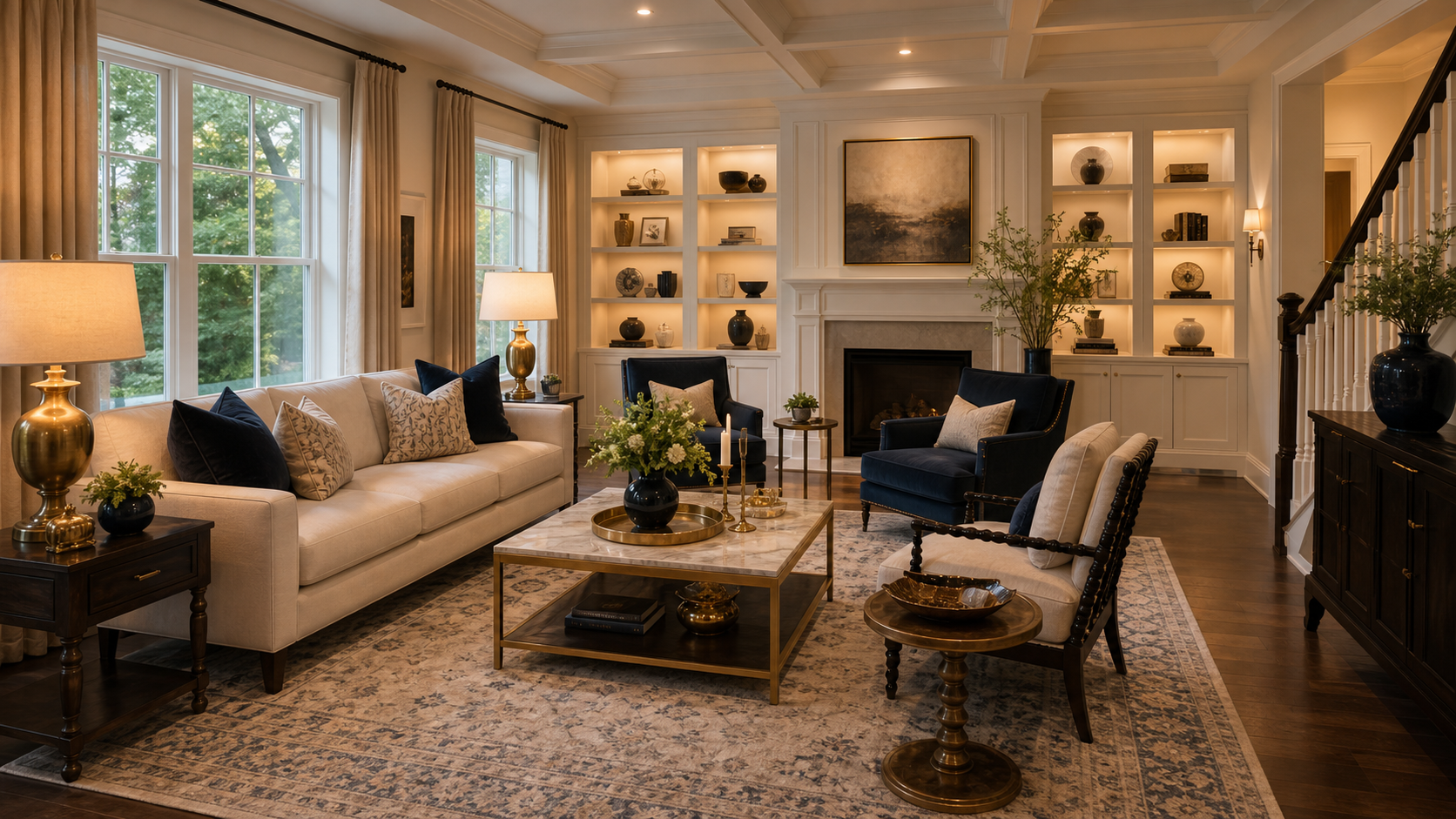
We’ll give you the honest answer, including the part most designers skip: sometimes hiring one isn’t worth it. A designer earns the fee on projects where mistakes are expensive and decisions are permanent. On a small, low-stakes room you love fussing over, you may be better off on your own. Here’s how to tell which project you have.
Is it worth the money?
On a renovation or new build, yes. A designer prevents the expensive mistakes (wrong layout, finishes that clash, lighting planned too late), saves dozens of hours of sourcing and coordination, brings trade access and pricing you can’t get retail, and delivers a finished result that holds together. The fee usually pays for itself in avoided rework alone.
The math people miss is the cost of getting it wrong. Redoing a kitchen island that’s six inches too deep, or eating the restocking fee on a sectional that never fit, dwarfs the design fee. One avoided structural mistake on a renovation can cover an entire designer’s fee. That is the quiet return: not just a prettier room, but the version where nothing has to be torn out and done twice.
Here’s where the value concentrates:
- Mistake prevention. Layout, scale, and finish errors are caught on paper, not after install.
- Time saved. The hours of researching, sourcing, ordering, and chasing deliveries move off your plate.
- Trade access. To-the-trade furnishings, fabrics, and workrooms you cannot buy retail.
- Cohesion. A whole home that looks intentional, not assembled one purchase at a time.
- Resale. Considered, quality design photographs and shows better in the NoVA and DC market.
When is it not worth it?
Hiring a designer is usually not worth it when you have a single small room, a tight budget that leaves little for furnishings after the fee, a strong personal vision you enjoy executing, or a purely cosmetic refresh with no construction. In those cases, a one-time paid consultation or an e-design plan often gives you the expert direction without the full engagement.
If decorating your own space is genuinely a hobby you love, a designer can take the joy out of it, and that’s a real cost. Same if your budget is so tight that the design fee would eat the furnishings budget; you may get more by spending it all on the pieces. The honest middle ground is a paid consultation. Pay a designer for two hours of direction, then run with it yourself. You get the expert read without the full-project commitment.
Do designers actually save you money?
Often, in three ways: they prevent costly mistakes and rework, they steer the budget toward where it matters and away from where it doesn’t, and many pass along trade discounts on furnishings that offset part of their fee. They rarely make a project cheaper overall, but they make the money you do spend go further and last longer.
Be clear-eyed about this: a designer is not a discount service, and a renovation with a designer is not cheaper than the same renovation done well without one. What changes is the hit rate. Fewer wrong turns, fewer “I wish we’d done that differently” moments, fewer pieces bought twice. On furnishings, trade pricing can offset a meaningful slice of the design fee, though it varies by firm and project.
What about resale value?
In a competitive market like Northern Virginia and Metro DC, professional design helps a home show and photograph better, which supports both speed of sale and price. Kitchens and bathrooms return the most, and timeless, quality finishes age better than trend-chasing choices. A designer steers spend toward the rooms and finishes buyers actually weigh.
Resale should not be the only reason to hire a designer, but it is a real factor here. Buyers in this market are discerning, and listings live or die on photos. A home where the finishes, lighting, and furnishings clearly belong together reads as cared-for and move-in ready. If resale is on your mind, the smartest spend is usually the kitchen and primary bath, and the smartest finishes are the timeless ones. Our guide on what actually makes a home look expensive gets into exactly which choices read as quality.
How do you get the most value from a designer?
Bring the designer in early, before finishes and layouts are locked, since that is when their input is cheapest and most powerful. Be honest about your real budget so selections fit the first time. Share how you actually live. And choose the engagement level that fits your project: full-service for big work, a consultation for direction.
The single biggest waste is hiring a designer too late, after the cabinets are ordered or the wall is framed, when their best ideas would now cost money to implement. Early is cheaper. Honesty about budget is the other one. A designer who knows your real number designs to it from the first selection; a designer kept in the dark designs a plan you then have to gut. If you’re ready to weigh it, our breakdown of the designer vs decorator decision helps you match the right professional to your project.
Find out if it’s worth it for your project
Tell us what you’re planning and we’ll give you a straight answer. Shea Studio Interiors has guided 30+ years of Northern Virginia and Metro DC homeowners on exactly this call.
Frequently asked questions
Is an interior designer worth it for a single room?
It depends on the room. For a complex space like a kitchen or primary bath, yes, even as one room. For a simple bedroom or office refresh you enjoy doing, a full engagement is often overkill; a one-time consultation or e-design plan gives you the direction without the full fee.
Do interior designers save you money in the long run?
Frequently, by preventing costly mistakes and rework, steering the budget to what matters, and passing along trade pricing on furnishings. They rarely make a project cheaper overall, but they make your spend go further and last longer, which is where the long-run value sits.
Is it worth hiring a designer if I have a small budget?
If the budget is very tight, a full-service engagement may not leave enough for furnishings after the fee. A better fit is often a paid consultation or an e-design plan, where you get expert direction for a fixed cost and execute the purchases yourself.
Does an interior designer add resale value?
Indirectly, yes. Professional design helps a home show and photograph better, which supports sale speed and price in a competitive market like Northern Virginia. Kitchens and baths return the most, and timeless finishes hold value better than trend-driven choices.
When should I hire an interior designer to get the most value?
As early as possible, before layouts and finishes are locked. Early involvement lets a designer fix problems on paper, when changes are free, instead of after construction, when they cost money. Late hires limit the designer to decorating what is already built.
or call 703-891-1570